Up in the Delta Sky: Interview

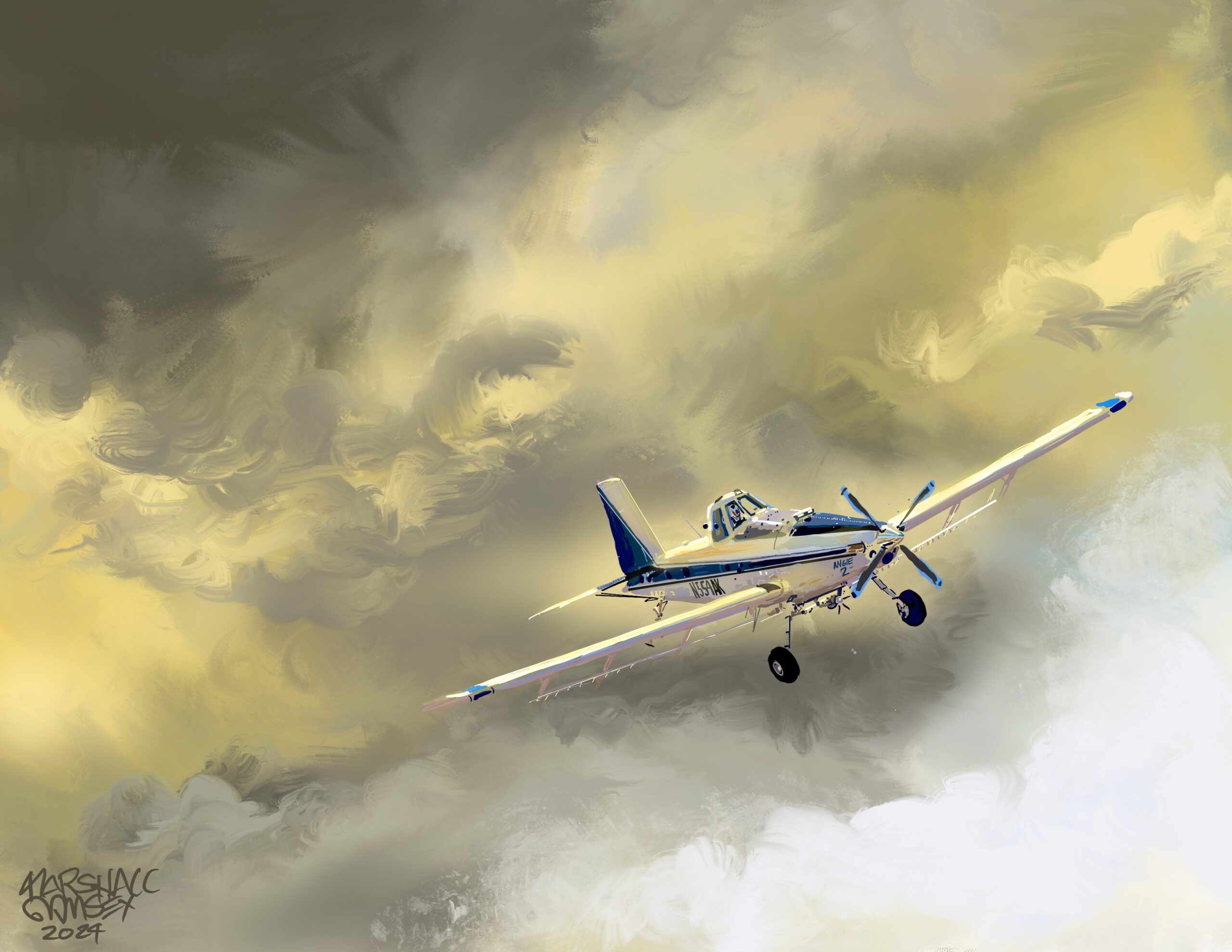
I’ve written about this character in five short stories. In the first one, he was a broken veteran who wanted to die to see his wife again. But then he found purpose when he saved his granddaughter and reunited with his estranged son. So I decided to twist the story of trauma on its head and tell it from the perspective of his son. This is a TV interview (notice the name of the show?), but someday, I will turn this into a novel. Enjoy. It’s about 1,600 words.

Transcript. Conversations with Daniel Danielson. Episode 124. Air Date. March 23, 2026
Intro: Good evening. I’m Daniel Danielson, and this is Conversations. Our guest tonight isn’t new to interviews. Van Vaughn Jr., a finalist for the Pulitzer Prize, is an investigative reporter from Mississippi and has also written a new book called “Up in the Delta Sky: A hero’s journey from Hell to redemption”. Van, since you’re not unfamiliar with interviews, welcome to the program.

Vaughn: (Shuffling nervously) I must admit that I am not used to being asked the questions.

Danielson: Congratulations on your book; you needn’t have looked very far to locate your subject.

Vaughn: Actually, I searched for him my whole life; this book tells my father’s remarkable journey from a prison cell in Vietnam to a prison cell in his own mind, from losing a love to finding a love which in the end rescued his damaged soul.

Danielson: I know that it was written from a place of love.

Vaughn: Not truly. I hated that man for most of my life, but it’s easy to hate things that you don’t understand.

Danielson: (Pause) Hmm. Where should we start?

Vaughn: My father was born in Indianola, Mississippi, shortly after World War II; his father had been a paratrooper and had landed in Normandy, fighting all the way through to the end of the war. He was captured by a member of the SS and yet came home alive. When he came back, he was harsh and abusive. I never got to know my grandfather, a man who was completely consumed by his own PTSD. He died when my father went to Vietnam; he had said that no child of his should go to war, and he just keeled over and died when Dad volunteered. Grandpa had met his match.

Danielson: Your Dad was already forged before going to war. He was a pilot, right?

Vaughn: Yes, he flew the Sandys — I should say the A-1 Skyraiders. He provided air cover and escort for Combat Search and Rescue (CSAR) operations. My father was like a sheepdog who looked after his flock.

Danielson: The A-1 Skyraider wasn’t a high-flying jet. It flew low and slow.

Vaughn: Yes. It was a beast of an aircraft. And Dad was a beast of a pilot. When a pilot went down, he knew Dad would fly low and protect him. And he did. When the helicopter roared in to pick up the pilot, Dad flew low and provided cover fire.

Danielson: Can you tell us about the mission that made him famous?

Vaughn: Things were going along perfectly until the MiG appeared. Dad drove it away, but his plane was badly damaged, and still he remained on station. Eventually his engine stopped working, so Dad pulled the control stick in order to reach as much altitude as he could. Then he jumped out, fought off the Viet Cong, and let the other pilot get away. After that, they held him in the Hanoi Hilton for the next six years. Dad was really a sheepdog. The President would eventually pin a medal on him for that.

Danielson: But that was in the future. Your family didn’t even know that he was still alive.

Vaughn: Not initially. Lord knows how Dad survived the torture. I guess growing up with his father prepared him for his captors.

Danielson: Do you remember his homecoming?

Vaughn: I’m not sure he ever came home. My mother, Angie, was a saint. PTSD, like it did Grandpa, ate up Dad. And he self-medicated with work. Dad, being a hero, was recruited by the airlines. He flew with TWA — Trans World Airlines — and worked his way up to flying to Europe on 747s. Mom claimed he had a mistress. He did — work. I hated him for not being there for me. I also hated what he did to Mom. She soon got sick. It was breast cancer, and she didn’t last a year. I blamed him. I was wrong.

Danielson: That really takes a lot to admit that you were wrong.

Vaughn: It took time. Nearly a lifetime.

Danielson: I can imagine. How did your Dad handle your mom’s death?

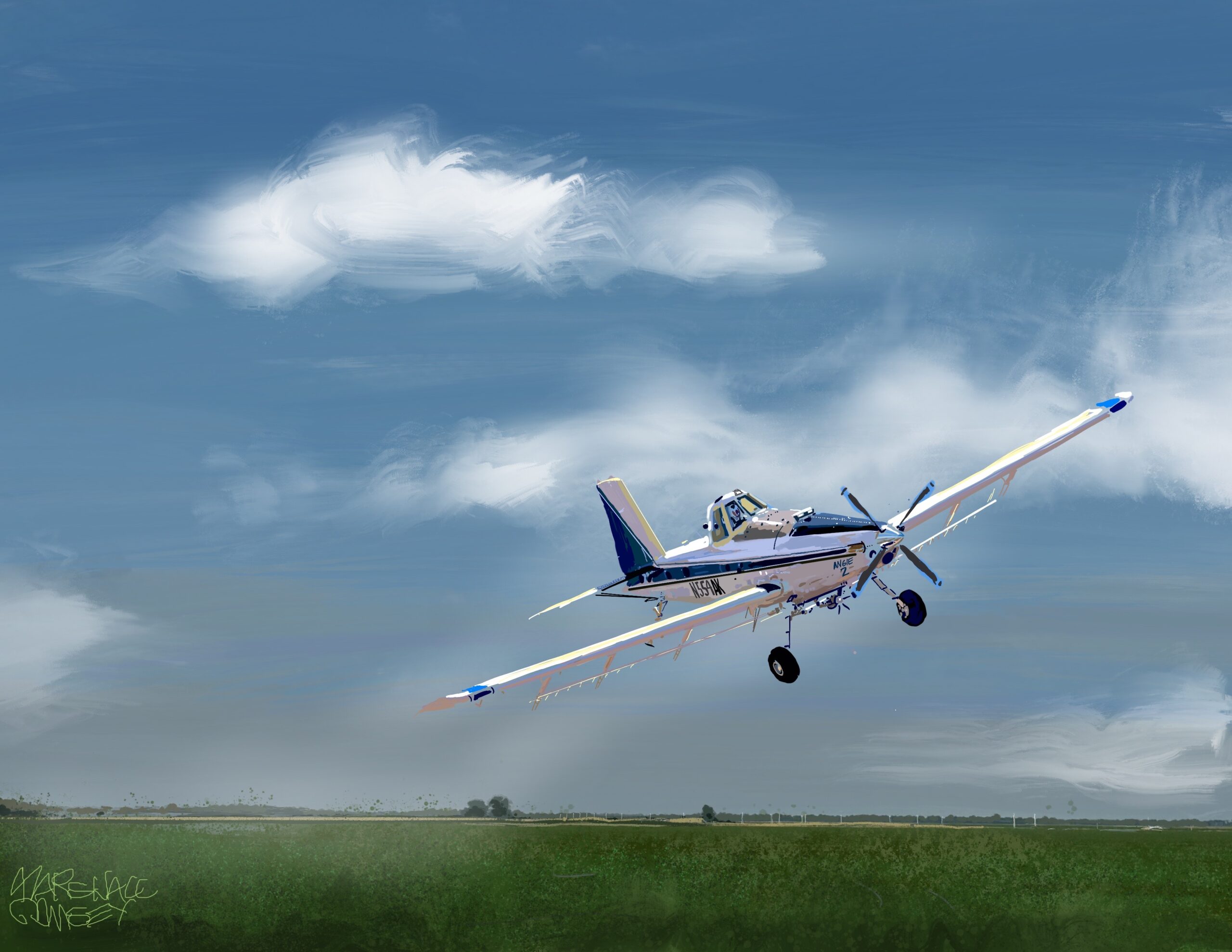
Vaughn: He didn’t. He fell into a deep depression, left the airlines, and took a job as an agricultural aviator — that is, a crop duster — in the Delta. Then he began flying in a way that seemed suicidal. He said he wanted to fly high enough to see my mother and actually named his plane after her. I eventually ended up living with my grandmother because Dad became obsessed with chasing my mom’s ghost. Dad flew under the power lines so low that leaves were wedged into his landing gear. He wanted to die so he could see Mom again.

Danielson: Yet he didn’t die. Now then, please tell us about the day he found your daughter.

Vaughn: For 30 years he flew all over the Delta like a madman. He knew every square inch except my house. For 30 years, I ignored his calls, letters, and pleas. He died in my mind when Mom died. I did well in school and decided to become a journalist. So I went to Columbia and eventually worked for the New York Times. Then I decided to buy a small paper in Indianola so I could raise my daughter, named after Mom, in a quieter place.

Danielson: And then your daughter Angie ran away.

Vaughn: She was four. One day my wife Ann noticed the back gate open. I called the sheriff to search for her, and I beat back the Delta to find her. I was panicking and praying to God. And then that damn plane roared overhead. The Sheepdog was coming to the rescue. I’ve never seen a plane fly that low.

Danielson: It was your dad.

Vaughn: He found Angie in the middle of a creek. Lord, it’s a miracle she didn’t get bitten by a snake. He orbited her until the sheriff could get there. Dad saved my little girl. He couldn’t save Mom, but he saved her namesake.

Danielson: So you started talking.

Vaughn: No, I began to listen; when the old man landed his plane that afternoon, he cried like a child. All the fear seemed to drain out of his eyes.

Danielson: You invited him back into your lives.

Vaughn: Yes.

Danielson: Did you ever learn how to fly?

Vaughn: Aw, hell no. Are you kidding? I was going to be the total opposite of him, well, at least until that day. And then I understood what I couldn’t before. Hurt people hurt people. And sometimes with the best intentions.

Danielson: Your dad wanted to die so he could see your mom again. One day, he got his wish.

Vaughn: I never believed he would make a mistake, but he did. Clipped a power line and flipped. He ended up in a crumpled Air Tractor in the middle of a cotton field. And the crazy thing is, Mom came to him — and told him to LIVE! He could have joined her, but she told him that Angie needed her Papa Van. When we found him, he was mumbling, “Sweetie.” That was his nickname for mom.

Danielson: Is that how he lost his leg?

Vaughn: Yes. But he gained a purpose. He practically raised Angie. And she loved him. Once, he had a heart attack while they were in the air, and she put the plane down near the local hospital. She landed on the highway in front of the emergency room. Angie saved him. The sheepdog had finally been saved by the girl he’d rescued.

Danielson: Did he see your Mom again?

Vaughn: No. He lived in the present, not the past. Dad got tougher after his heart attack, but also more tender. We bonded, and he told me his story. He wanted me to write it all down — because I was the best writer in his eyes. I couldn’t believe what he went through. It was torture that would break the toughest stoic. But he became tender once he started loving us. He focused on gardening, flying, annoying our neighbor, and taking on bullies in town. When he was 80, he went back to Vietnam, stood in his cell, and met a couple of his guards. And he forgave them.

Danielson: Really?!?

Vaughn: Really. If the older man could forgive someone who pulled his fingernails off, who was I to hate him still?

Danielson: And Angie?

Vaughn: She attended the Air Force Academy and flies F-22s. She doesn’t like flying low. Dad was so proud when she graduated. He gave her his pilot’s wings and was introduced on stage as the hero he was. She was so proud to stand next to him that day.

Danielson: Van, how did your Dad pass?

Vaughn: Cancer. It was lymphoma. Stage IV. And it happened fast, although he lived a long, productive life. His body was in pain. Yet his soul was at total peace.

Danielson: Wow! Were you there when he died?

Vaughn: Yes. My daughter Angie, Ann, and I were holding his hand in hospice. I’m so grateful we were. And I’m grateful Angie was home on leave. I swear he waited until he could say goodbye to her. But someone else was there with us.

Danielson: Who?

Vaughn: Mom.

Danielson: REALLY?

Vaughn: As he took his last breath, we could see her glowing, translucent figure standing at his feet, reaching out to grab his hand. She looked just as beautiful as she did before she got sick. And his last words? “I love you, Sweetie.”

Danielson: So. This book is about how your father learned to live with his demons.

Vaughn: No. It’s a book about how my father, the sheepdog, saved me from mine.

Danielson: I want to thank our guest, Van Vaughn, Jr., for sharing his father’s incredible life. You can find “Up in the Delta Sky” at all of your favorite independent bookstores. On behalf of the Conversations crew, thank you for watching.
Posted in Aviation Art, Writing | Leave a comment

The Tiffany Jesus

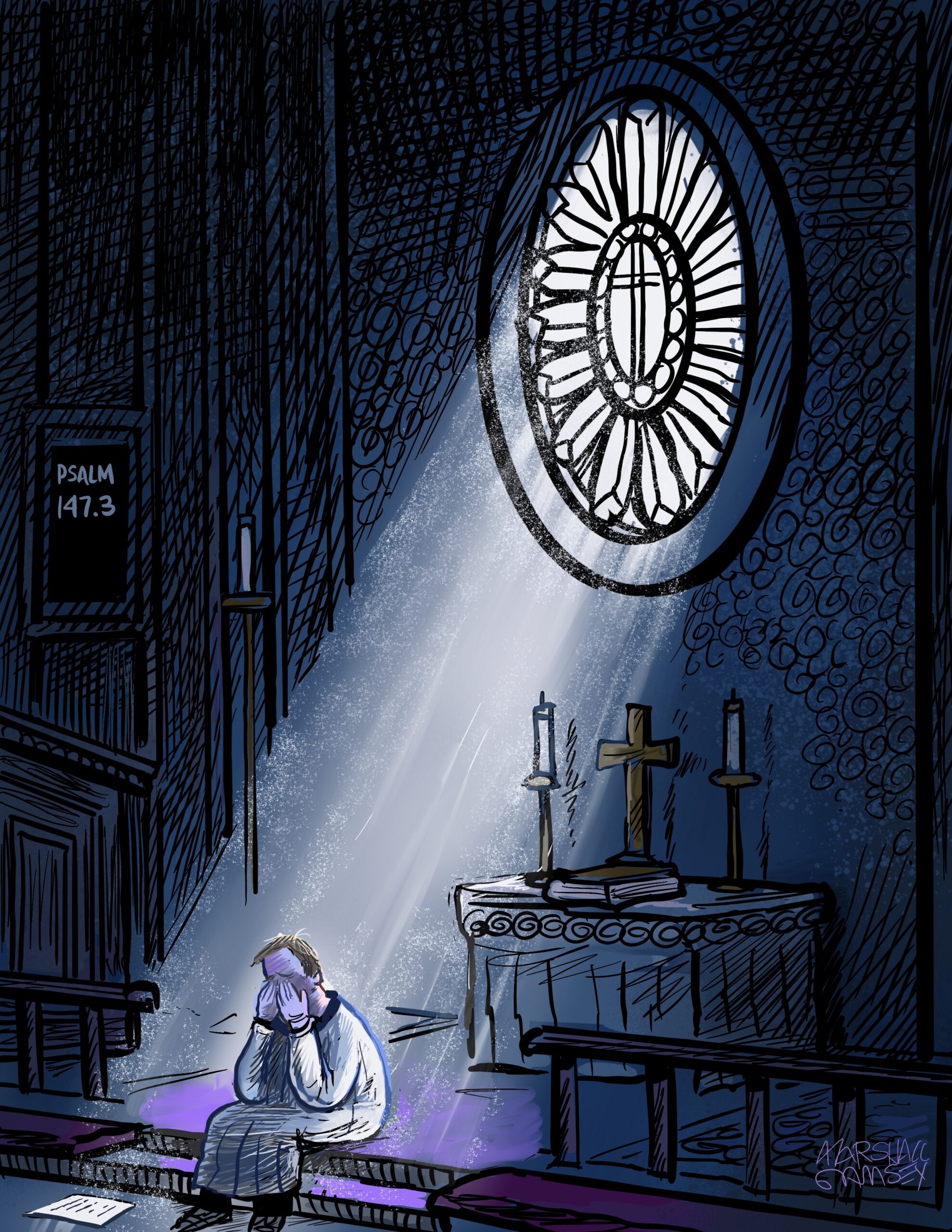
Golden sunlight filtered through the city’s skyscrapers, turning the old cathedral’s stone from a pale gray to an inviting gold. The Right Reverend Thomas Paul locked the red wooden front doors for the night. Normally, the sexton would have locked up, but Reverend Paul did tonight. If he had been Presbyterian, he would have said that what was to follow was predestined. Whatever it was, it was definitely a Godsend. 

The cathedral was an architectural marvel. Built by craftsmen during the Gilded Age, it was financed by men who realized, at an advanced age, that they needed more umpth to their heavenly resumes. Reverend Paul’s favorite feature was the Tiffany glass image of Jesus turning water into wine. The next morning, Paul looked up at the magnificent glass. Colored light from the rising sun illuminated him as he worried about the church’s future. Scandal, changing times, and an aging congregation had caused the pews — and coffers — to grow increasingly empty. He looked up and said under his breath, “Jesus help me. No, help this church.” As he walked out of the nave and into the hallway that led to the church offices, portraits of stern-looking men glared at him. “They had it easy,” he thought. “All they had to do was unlock the door on Sunday to fill this place.” During the morning Vestry meeting, Paul and his Vestry strategized about how to save the cathedral. They had tried every gimmick in the book to attract younger parishoners. “What about a rock band?” one vestry member proposed. That would have killed off the rest of the older parishioners in one fell swoop. “They had better play Stairway to Heaven — because it’s going to be needed when Mrs. Smithmore (the 80-year-old heir to the BowWow pet food fortune and the cathedral’s biggest donor) drops dead.”  

Sunday’s service was a quarter full. The plate was even emptier. Paul gave his homily and watched the remaining members shuffle out of the old church. He went back to his office, got his overcoat and hat, and swallowed his pride. An ambitious attorney in his former life, the good Reverend Paul wasn’t used to losing. He tasted acid in his throat. So this was what it was like?  He sat beneath the Tiffany Jesus and cried. 

After he gathered himself, the priest walked outside and locked the front door; he then heard a sound. “Psst.” It was one of the many homeless who lived downtown. Some said this was why no one wanted to come downtown. Reverend Paul jumped initially, then caught himself and felt ashamed of his fear.  

“I’m sorry. May I help you?”

The homeless man, who looked to be in his 30s with a deep tan complexion and burning brown eyes, looked into Paul’s eyes and said, “No. But I can help you.” 

Reverend Paul instantly slipped into priest mode, shrugged off the comment, and said, “Let me buy you lunch.” The two men walked to the nearby diner, where they broke bread together. 

Tuesday at lunch, the Reverend Paul, intrigued by his new acquaintance, went looking for him. There, in the alley next to the cathedral, was a small encampment: a tent with a sleeping bag, a couple of books, a small lantern, and some empty cans tucked in behind an old fence. The priest had never seen this before, and he vowed to become more aware of the neighborhood surrounding his church. 

“Hello there,” a familiar voice rang out. The priest turned around to see the man.  

“I found you,” the priest said.

“But seek first the kingdom of God and his righteousness, and all these things will be added to you.” 

“That’s pretty good,” the priest said. “You have read the Bible?” 

“How about lunch?” the man replied. 

“Lunch is good.” 

As they ate, the man pulled a crumpled piece of paper from his shirt. “I’d like you to read this,” he said. Being polite, the priest took the paper, put on his readers, and began to take in what the man had written. 

“This is really, really good,” the priest said. 

“Thanks.” 

The following Sunday, he committed what would be a sin in the journalism world: he plagiarized. He took out the crumpled paper and read it verbatim, feeling both relief and guilt as the words carried him. Light glowed through the Tiffany Jesus and onto the congregation.  

The next Tuesday, the priest and the man had lunch again. Once again, the priest took the man’s writings and passed them off as his own. Once again, the glow illuminated a now larger congregation. Paul told himself he would stop soon, but the promise felt weaker each time. 

This went on for a year. The man got a lunch, and the priest got a full church. Soon, the cathedral was full. A second service was added. The man collected the sermons and put them out as a book. TV stations had him on to share his wisdom. The light coming from the stained glass burned brighter and brighter. Paul should have felt triumphant, but instead he felt increasingly cornered by what he owed. 

On Epiphany, the priest began his sermon to another packed crowd. There, in the back of the church, was the homeless man. The priest saw his deep brown eyes and felt a burning in his heart. The glow from the window stopped for a moment and then burned brighter. Before the closing prayer, the homeless man walked out. The priest didn’t greet the flock — instead, he ran out after the man who had rebuilt the cathedral. Reverend Paul felt a deep shame as he caught up to his now-friend and said,

“I stole from you. I am SO SORRY, 

“I know how you can repay me. Get me a bottle of water.” 

Stunned by the request, the priest ran back into the cathedral and to the breakroom fridge. 

Panting, he handed the bottle to the man. 

“Remember when I told you I’d save you?” 

The priest thought for a moment as the man continued.

“You showed me kindness when no one else would. Blessed are the merciful, for they will receive mercy.” 

That’s when the man took a sip of water and set the bottle down. “Don’t be so doubting, Thomas. It’s not a good look on you.” The Reverend Thomas Paul looked into the man’s eyes and witnessed his whole life flicker past. From the pain as a child, to the fear as an adult. It all washed away. 

“I love you, Thomas. And that’s what it is all about. So release your fear,” the man said, then turned to leave. He walked down the street until he disappeared out of sight.  

Stunned and with tears in his eyes, the priest turned to pick up the bottle of water. As he looked down at it, he understood the gift he had been given. 

It was wine. 

Posted in Writing | Tagged | Leave a comment

Short Story: When Lightning Strikes

The crowd’s buzz quieted as the slight man walked up to the podium. A banner behind him read, “NDE SYMPOSIUM.” NDE stood for “Near Death Experience,” a topic Jon Tom knew a little too much about.

“Good evening. Welcome. I’m Jon, as my introduction said. Yeah, I’m the man with two first names. And yeah, I’m not sure my parents liked me very much. At least I’m not named ‘Ben Dover.”

The crowd chuckled and then focused on the man as he lifted his sleeve. His arm looked like a burned hot dog.

“This is where the lightning left my body. If not for my friends and the paramedics, I would be enjoying some quality time in the light with Jesus and my parents.”

After sharing his experience with the crowd, Jon Tom left out one crucial detail.

Jon Tom came back to life with the ability to know when, where, and how people would die. No, he didn’t see dead people. But he knew when they would die. When the Angel of Death would come knocking on their door.

Jon Tom, the man with two first names, loathed his gift and the torment it caused him.

Time moved on after the lightning strike. Jon Tom began drinking, then gambling. “I figure I’ve already beat the odds,” he’d tell people. But for a lucky man, he had terrible luck. Soon, drowning in debt, he took a job as a bartender at the Lucky Strike Bar. And every day, when he saw people come in for a drink, he knew their fate.

He had tried to tell people, but they just thought he had lost his mind. And honestly, they weren’t wrong. He was losing his mind slowly. The old guy in the golf shirt would die tomorrow on the 18th hole from a heart attack. The server, Bonnie, would slip and fall down the stairs in her home. The child walking by the bar’s window would be hit by a car in six months while chasing a ball into the street. His boss? He’d be shot by a robber in two weeks, and as a result, the bar would close, and Jon would lose this job. He tried to convince his boss to take a vacation.

Knowing the future is a hell of a load to bear.

Later that evening, back at the bar after the NDE symposium, the night was painfully slow. While drying glasses, Jon Tom noticed a middle-aged couple walk in and take a seat. The man, with dark, graying hair, and his wife, with sad eyes, worked hard not to make contact. Both stared at their phones. Jon Tom put together their story based on their body language.

Jon Tom sensed that distance stemmed from sadness and a loss of trust.

Then the flash hit him.

Both still loved each other; however, they had lost the ability to express it. Their relationship was a slow-motion tragedy. They had met after college. After a few dates, both fell deeply in love. By their mid-20s, they were married. They raised two kids and worked well as a team. But the perception of infidelity slithered in like a serpent. Although both were innocent of the accusations, trust was lost. The silence turned into physical distance. Two people lived in the same house but were a million miles apart. And while some meteorites flame out in the upper atmosphere, others just die in the cold loneliness of space. That distance and their mutual resentment would lead to their final fight in two weeks. The one where the man stormed off in a car. A drunk driver hitting his car head-on was the cause of his death. A bottle of pills swallowed by the suddenly regretful and distraught wife was the other. Jon Tom stood over her body and screamed. He could no longer stand aside and allow a tragedy to happen.

He walked over to the table and greeted the couple.

“What a fine-looking couple you are. What would you like to drink?”

But before they could answer, Jon Tom grabbed both of their arms. And before they could pull away or scream, “LET ME GO!” both were suddenly transported into Jon’s vision of their tragic future.

Jon Tom felt the electricity flow through his wounded arm and into their souls. His eyes illuminated, and suddenly he collapsed. He felt the warmth and love of the light wrap its arms around him. He was home.

“CALL 911,” the man yelled. He started doing CPR on Jon Tom. Suddenly, the dead man was reluctantly jerked out of the light and came back to life.

“Oh God, not again. Can’t I just stay dead?” Jon Tom rubbed his neck and moaned as he looked up and saw the couple hugging, sobbing, and apologizing. He could hear, “I’m so sorry. I love you!”

When Jon Tom revived, he realized something had changed: he no longer foresaw people’s deaths. The gift—or curse—that tormented him since the lightning strike was gone.

The couple put their hands on Jon Tom’s hands and said, “We have no idea what you just did. But how can we repay the favor?”

“I think you just did,” Jon Tom grinned.

Posted in Writing | Leave a comment

Short Story: The Other Crossroads

Clunk!

The lights on the black BMW’s dashboard lit up like a demonic Christmas tree. As the $100,000 sports sedan sputtered to a stop, Bob Johnson looked at his cellphone. It was dead, too. Great. No lifeline; and he really wasn’t sure where he was. All he knew was that he was on Highway 1 south of Rosedale, somewhere in the depths of the Mississippi Delta. And he looked at his phone again, and then realized he was in big trouble. Earlier in the day, he had signed a deal with a client in Clarksdale. Now he was stuck in the middle of nowhere The sound of cicadas and a wet, wool blanket of humidity greeted him as he climbed out of this Beemer. Steam poured from under the hood and from Bob’s ears.

Why now? Why in this Godforsaken place? Bob shook his fist at the sky

Bob Johnson was one of the nation’s most successful attorneys and entrepreneurs. He also was a lot like his car. He had traveled fast, had not done much in the way of maintenance and now was breaking down. He kicked the car’s left front tire out of frustration and felt a sharp pain radiate up from his toes.

“OK,” Bob thought, “That was stupid.”

“I couldn’t agree more.”

A voice boomed from a nearby creek bank.

The Mississippi Delta, which once had been a giant swamp, was tamed by man in the late 19th and early 20th Century. Or at least man thought he had tamed it. Since then it had become a battleground for great good and great evil. Another Bob Johnson had once allegedly sold his soul to Satan himself in exchange for Eddie Van Halen-worthy guitar skills. This Bob Johnson, though, wasn’t interested in musical skills. He just wanted to get home. As the man rose up from the creek bank, Bob turned and watched a white Air Tractor plane performing a mesmerizing aerial acrobatic routine as it dusted a nearby field.

“Can I help you?” the old man said, using his fishing pole is a walking stick.

He was African-American, maybe 80, and wore a pair of worn overalls and a clean, brilliantly white shirt underneath.

“Not unless you are a BMW mechanic.”

The old man smiled, “I didn’t exactly bring my toolbox. But I live close by and have a phone.”

Bob realized that this was the best deal on the table and reluctantly accepted.

“So tell me about yourself,” the old man asked.

“Well, I guess you should tell me your name first if I’m going to burden you with my life.” Bob replied.

“My name is Gabriel. I have lived here my whole life and I have seen incredible beauty and horrific pain. My wife died of cancer three years ago and our only son died in the Iraq War. It’s just me now. Me and these fish I try to catch.”

“I bet,” Bob replied. Bob knew of the history of the Delta. In the middle of its great beauty was also incredible pain. That pain been like an irritant in an oyster; it covered and turned pain into a pearls. A good example of that was the Blues. Bob continued, “My name is Bob. I grew up in Atlanta, became a successful attorney and am one of the best in my field.”

“So you are humble,” Gabriel said with a smile.

“It ain’t bragging if it is true.” Bob shot back.

“Then why are you so unhappy, Mr. Successful?” Gabriel replied.

Bob didn’t know how to answer. That hit him squarely in his very carefully hidden heart. How did this man know that his life was a wreck? But Bob did not answer as they continued to walk toward Gabriel’s house.

The two men came to an intersection — a crossroads you might say.

“Let me guess, this is where you offer me something for my soul.” Bob sarcastically said.

Gabriel shook his head.

He then said, “No, I don’t need your soul for you to be in Hell. You’re already there. And you know what? You put yourself there. You don’t need Satan here to temp you. You’re miserable voluntarily. And you know what? You have the key to get out in your own pocket.”

Bob fumbled around in his pocket and just felt his BMW’s key fob. “What do you mean?”

Gabriel continued, “I sense great fear in you. And no, I am not Yoda. But when you live around here long enough, you understand the cancer that trauma is.”

Bob looked silently into the old man’s eyes. He had grown up with a mentally ill mother who drank. One minute she was the best mom ever. The next, she was the Devil herself. Bob had blamed himself for the fact that the woman didn’t love him. So he became an overachiever and a control freak. That control, though, had started to unwind as he got older. And today, deep in the Mississippi Delta, his ability to be the master of everything in his life had broken down.

He felt sweat trickle down his back.

Gabriel looked back at Bob. When Bob lifted his eyes and looked at Gabriel’s face, he saw his mother’s face. And when Gabriel spoke it was her face. “I am sorry, son. What you thought was evil was me trying to survive. I didn’t know how to get help. But you can. You don’t need to continue on my route. This is your crossroads. You have the freewill to choose a different path.”

Bob was convinced it was the heat of the Delta. But he looked at the old man’s face again and it was back to, well, an old man.”

Gabriel looked Bob and said in his mother’s voice, “Love, forgiveness, service. That’s the path you need to take. And you should also think about taking up guitar. I think you’d be good at it. I love you.”

Bob said, “You aren’t the Devil?”

Gabriel laughed, “Do you think the Devil would be named Gabriel?”

Bob’s phone buzzed in his pocket. It was working! The BMW dealer had gotten notice that his car had broken down and was sending a tow truck.

Gabriel said, “My house is nearby. Let me get you a bottle of cold water and I’ll take you back to your car in my truck.” The two men walked towards the modest old house tucked in the shade of four oak trees.

The crop duster buzzed overhead. As the pilot looked out his cockpit canopy, he only saw one man in a suit walking out of Hell and toward a new life.

Posted in Aviation Art, Writing | Leave a comment

SHORT STORY: The Fight for His Life

Robert Franklin was 39, had a family, and had just received the most devastating news he could imagine. It was a moment when he needed to pick himself off the of floor and fight. But as he looked inside of himself, he saw a small child hidden in corner, afraid. He recognized that child as himself when he was 8. He could hear his parents fighting, the threats of divorce and the belittling words toward each other. He stood there, hearing the echoes of those threats, and felt the fear rise up inside of him. And then he felt himself shut down.

The metaphorical plane was in a nosedive and here he was locked up and unable to act. Robert felt like throwing up and put his hand on the wall to brace himself.

His first reaction was to yell at that kid. Dammit, this was no time to hide! But that kid had suffered enough. Instead, he mentally put his hand on the little boy’s shoulders and offered him the one thing the child had always needed: Unconditional love.

“You’ve been so strong for so many years. Thank you. I can’t tell you how grateful I am for all you’ve done for me. But you weren’t responsible for their fights. It wasn’t your job to save your parents. It was your job to be a kid. I’ve got this. I’ll always protect you, but know this: I’ve got this. You go and play. I’ve got work to do. You are and always will be loved.”

The little boy crawled out of the darkness and hugged him. He could see his own face from all of those years ago and he felt nothing but love for the little boy.

Robert Franklin was in the fight of his life. He needed to be there for his family. But he knew he had the strength to fight it. That strength, that ability to conquer fear once and for all, came from love.

Posted in Uncategorized | Leave a comment

The Empty Nest

My youngest son’s dorm room was set up and he and I had figured out how to get his PS4 hooked up to the wifi. His mom had done a fabulous job making a generic space feel like home. My son then pointed at the radar app on his phone. He noted that a particularly nasty severe thunderstorm was forming nearby and said that we would have to leave if we wanted to the car before it hit. While I was impressed at his forecasting ability (he will study meteorology after all), I wasn’t ready to leave. Neither was his mother.

Thunder rumbled.

A storm WAS coming. We gave long hugs and said our goodbyes. Lightning crackled overhead as we dashed across the parking lot. As we ran, I thought about all he had accomplished to make it to this moment. Memories swirled like the wind.

While rain hadn’t started falling yet, there was moisture on our cheeks.

The day started out with dark clouds. I woke up really cranky. I mean, “scream at the puppy” angry. Overuse had caused my back to REALLY hurt. I was exhausted from lots of travel. And I felt anxiety about the move-in process. Amy told me to dial back my grouchiness — it was my son’s big day after all. She wasn’t wrong of course; I quickly pulled my head out of my rear and realized why I was upset And it wasn’t pain, exhaustion or anxiety.

I was sad.

Reality was crashing down around me. It was over. When people say, “the days are long but the years are short” about raising children, they aren’t lying. I miss my boys.

I then thought about how much I love them as adults. The clouds parted and I felt a ray of sunshine come through. Having children gave me a better understanding of the concept of God’s unconditional love of His children.

I love who they have become as men. Unconditionally.

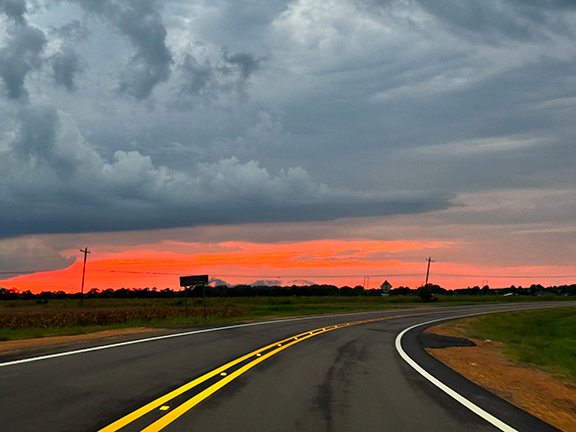
As we drove, heavy rain made it like we were driving through a car wash. Then as suddenly as it hit, it stopped. As we drove out of the storm, the sun painted the horizon red. I took it as a sign of love overcoming sadness.

I put on a song that I used play to comfort our oldest son when he was a baby. And then we drove toward our empty nest.

Posted in Blog, Writing | Leave a comment

The last embrace

Normandy, France. American Cemetery.

Jim Randolph’s great granddaughter Jennifer pushed his wheel chair through the garden of stones. The beach below was a dance through Hell. This was the final resting places of heroes — and the unlucky. Medals on his chest clinked like wind chimes as he rolled across the manicured lawn. His eyes burned with the salty pain of his memories.

“I’ve got to see my friend one last time,” he repeated.

Each stone had a name. Each stone had a story. Each person beneath those stones had sacrificed their life for the very freedom he had enjoyed for over 80 years.

Yet he had sacrificed, too. While not the ultimate sacrifice, he still suffered from the pain due to shrapnel buried deep in his body. It wasn’t just physical pain, though. The PSTD had been buried deeper. It came out, though, with a vengeance, at night. His wife feared waking him from his nightmares. Once, in 1954, he had nearly choked her to death after she startled him awake. She told the kids, “Don’t wake up daddy.”

Some nightmares, though, were impossible to wake up from.

Jim could still smell the blood and the cordite. The beach that day was littered with pieces of humanity. He thought of the men who had to clean that carnage up. They had their own set of nightmares, he thought. Jim didn’t have time to process that day. His unit pressed forward from the beach into the hedgerows to Paris to the Battle of the Bulge and finally toward the Rhine River.

Like then, Jim and Jennifer were on a mission. They continued to press forward.

Each grave’s name had a golden hue. The French, who had deeded the land for this cemetery over to the Americans, would rub soil from the beach onto the name. A cold mist rose up from the beach as they rolled further toward his objective.

The wheelchair slowed as they reached their destination.

He and his best friend Hadley Bryant joined the Army in 1943 when they turned 18. They trained together, drank together, went on leave together, chased English women together, and then went to war together. Hadley made it halfway up the beach before the German shell took his head off. Jim had watched his friend’s body drop like a rag doll.

That’s when the nightmares began.

Hadley’s headless ghost had haunted him for years. It was the same nightmare over and over. Hadley would reach out his hand and then try to embrace him. Jim would awaken and ask,”Why did I live and he died?” It was a question that haunted veterans since the Romans, he was sure.

Jim knew, though, why they had fought. He had smelled burnt flesh in the liberated concentration camps. He had seen first hand the hellish train tracks fascism would take you down. Evil had to be answered head on. Hadley had answered it head off.

The mist thicken around them. Fog from the sea swarmed the beach and the cliffs like the Americans. British, and Canadians had so many years ago. He felt the cold, wetness wrap around him like a blanket.

As Jim looked out at the crosses and Stars of David, he noticed bodies walking toward them. They were soldiers, all in full uniform. They looked young, just as they had looked during the War. Birds stopped singing and the cemetery got ghostly quiet.

Then he saw him.

Hadley emerged from the fog and held out his hand. Jim slowly stood and embraced his old friend. Hadley hugged his friend and began to lead Jim into the mist.

Jennifer, panicking, grabbed her phone. “Hello? I need an ambulance. It’s an emergency! My great grandfather has collapsed,” as she desperately checked her great grandfather’s non-existent pulse.

Jim’s nightmares ended once and for all.

The birds started singing again. A lone sunbeam broke through the fog and illuminated the body of the warrior in the wheelchair. The nightmares had ended and Jim Randolph was finally at peace.

On Memorial Day 2025, an old veteran’s war was finally over.

The bird started singing again. A lone sunbeam broke through the fog and illuminated the body of the warrior in the wheelchair. The nightmares were over and Jim Randolph was finally at peace.

On Memorial Day 2025, an old veteran’s war was finally over.


Posted in Uncategorized | Leave a comment

SHORT STORY: The Concierge

John Ray Jackson’s passionate plea to God was going unanswered.

“Please, Lord, let me live.”

There was no response to the desperate call.

Sitting in the all white room, Jackson’s soul was crushed by the silence. Fear began to smother him like a pillow over his face.

“It’s a bit late for pleading for your life, don’t you think?”

Jackson opened his eyes and looked around. There, standing next to him, was a nondescript man holding a clipboard. He looked up from said clipboard and quietly spoke the words that Jackson did not want to hear.

“I mean, you’re already dead. As a door knob.”

Jackson’s normally would have freaked out. Instead, he felt strangely calm.

“Am I in heaven?”

“Oh no,” the man with the clipboard said,” You died so quick that it threw us off. So you’re in what you would call a waiting room.”

“Great,” Jackson thought, “even death has a waiting room. It probably has a gift shop, too.” He fiddled around in his pocket and pulled out his phone but there was no signal. He thought. “I must be in Hell.”

The man with the clipboard chuckled, “Oh no, you’re not in Hell. You’d know if you were. Think of a marshmallow over a campfire.”

Jackson replied, “Then I’m in Heaven?”

The man with the clipboard replied, “Like I said, you’re in a holding room while we get your particular Heaven ready for you. And you can call me ‘Steve.’ I’ll be your concierge.”

Jackson said, “How did I die?”

“Does it matter?”

“I guess not. So, is heaven a bunch of clouds and people playing harps?”

Steve looked at his clipboard, “Thankfully no. Clouds are wet and cold. And an eternity of harp music would drive us all nuts. No, Heaven is your happiest moment on earth for eternity.”

Jackson scoffed, “I didn’t have many happy moments.”

Steve smiled politely, “So you thought. You wasted so much life, you know. We’ll have your eternity ready in a moment.”

“Let me guess. You’re going to show how my life made a difference in the world. Then all I have to do is say, ‘I want to live,” and I’ll end up in Bedford Falls.”

Steve shook his head, “You watch too many movies. You’re dead as a rock. Your funeral has already happened. You were cremated. Stick a fork in you, you’re done. Ashes to ashes, dust to dust. Your ashes were dumped in the Gulf.”

Jackson slumped in the hard plastic chair, “You didn’t write greeting cards in a former life…”

Steve smiled and said, “Follow me.”

Jackson followed his concierge toward a door that read “Exit.”

“What if I couldn’t read English?”

Steve, not looking up from his clipboard, said, “then it would be the language you could read. We love everyone up here.”

Jackson came to the door and it opened. There in front of him was a lake surrounded by mountains.

“This isn’t my favorite memory.”

Steve replied, “No, but it was your dad’s.”

Soon Jackson heard a familiar voice. There, surrounded by his own parents, uncles and aunts, was his father.”

Jackson ran down to the lakeshore and embraced his dad.”

Steve checked off a box on the clipboard and said,” This is your dad’s favorite moment. That’s why he is here. Your favorite moment was being with him. And that’s why you’re here.”

Posted in Writing | Leave a comment

Thunderbolt & Lightning

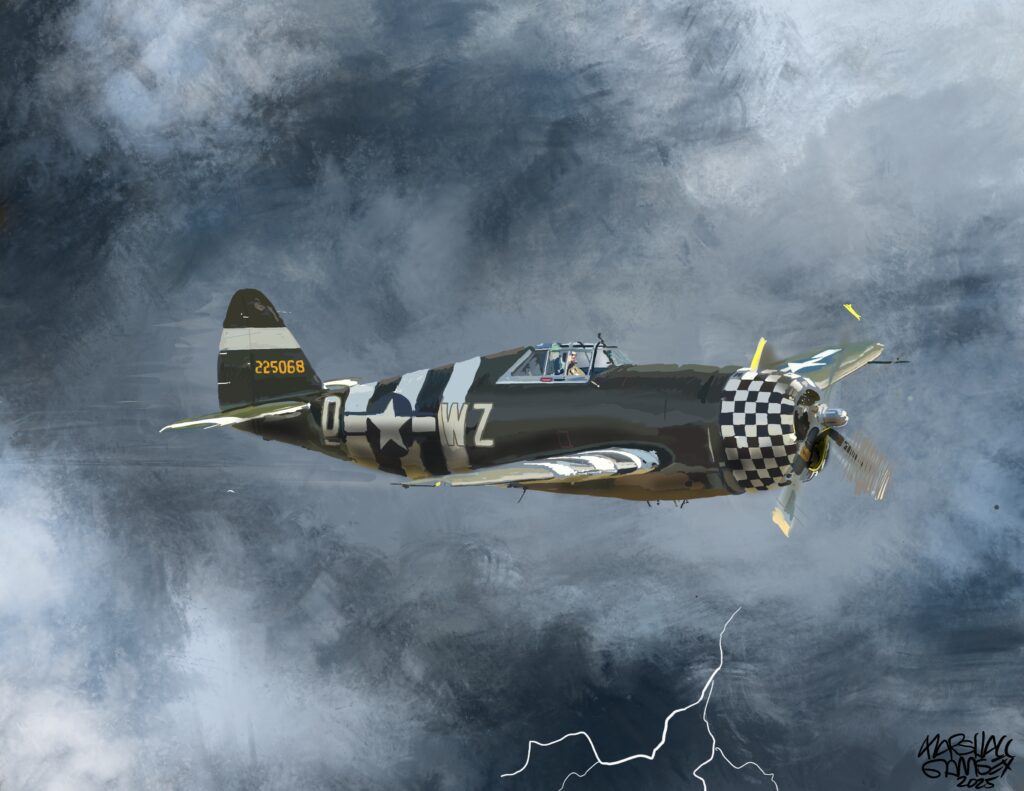
P-47 Thunderbolt painting: Procreate painting.
Posted in Aviation Art | Leave a comment

Coloring Sheets:

Posted in Coloring Sheet | Leave a comment