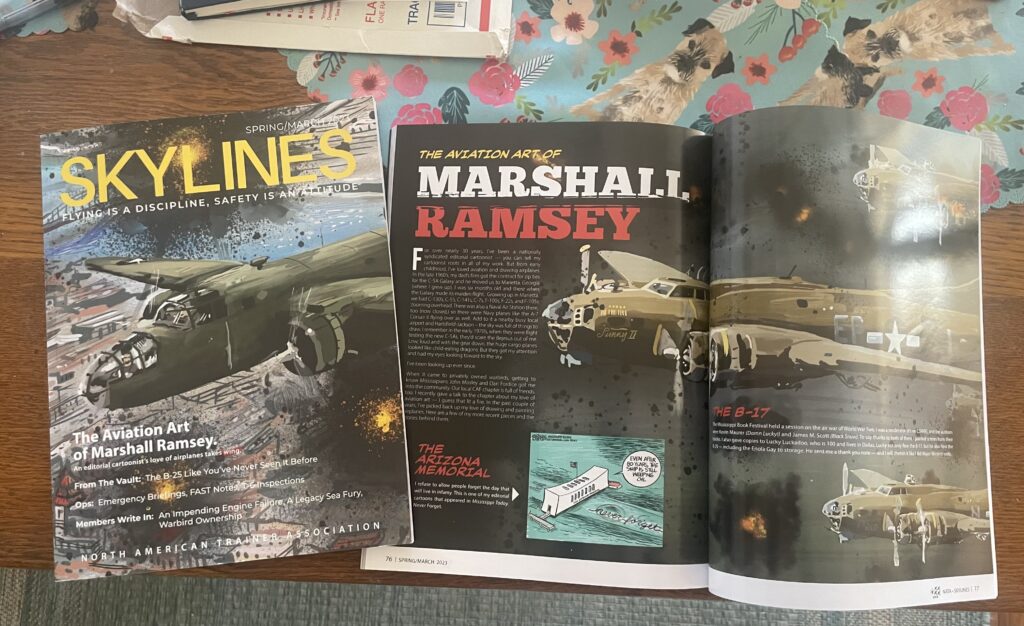
Thank you, Skylines Magazine (the official publication of the NATA), for featuring my aviation art in your March/Spring magazine. Needless to say, I’m humbled to have a 12-page spread — and the COVER! THANK YOU!!!
Thank you, Skylines Magazine (the official publication of the NATA), for featuring my aviation art in your March/Spring magazine. Needless to say, I’m humbled to have a 12-page spread — and the COVER! THANK YOU!!!
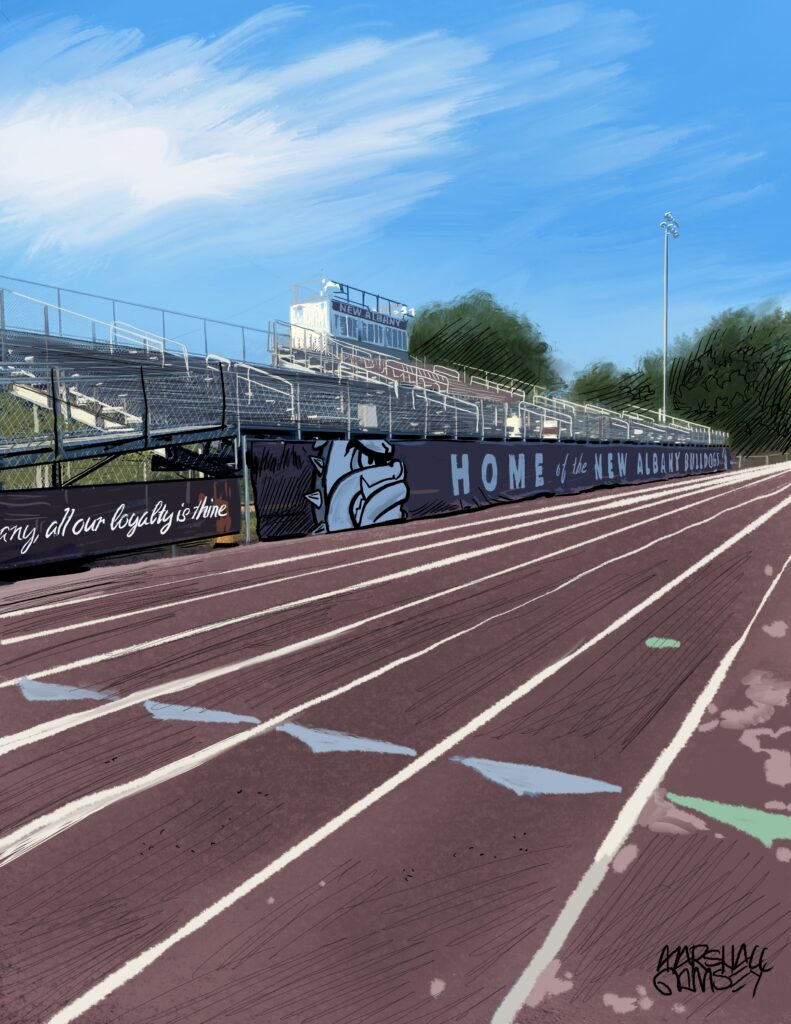
I was asked by local writer Nash Nunnery to illustrate his upcoming book, Magnolia Gridiron Cathedrals (it will be out in August). He touched base with me around the first of the year and I had an April 1 deadline to draw/paint 43 Mississippi high school stadiums. I got a very late start on it and between it and my income taxes, I got nervous I’d miss both deadlines (I did finish my taxes on time.) Each stadium took me two to three hours to do — I plugged away at it on night and weekends. Like eating an elephant, I did it one bite at a time.It was a fun project to work on and I learned a lot about the communities (and their Friday night cathedrals). I also got pretty good at air traffic control. Five more stadiums were added and my deadline was moved to April 15.
I finished on April 1 and made the original deadline. Here’s one of the 48 drawings I did for the book.
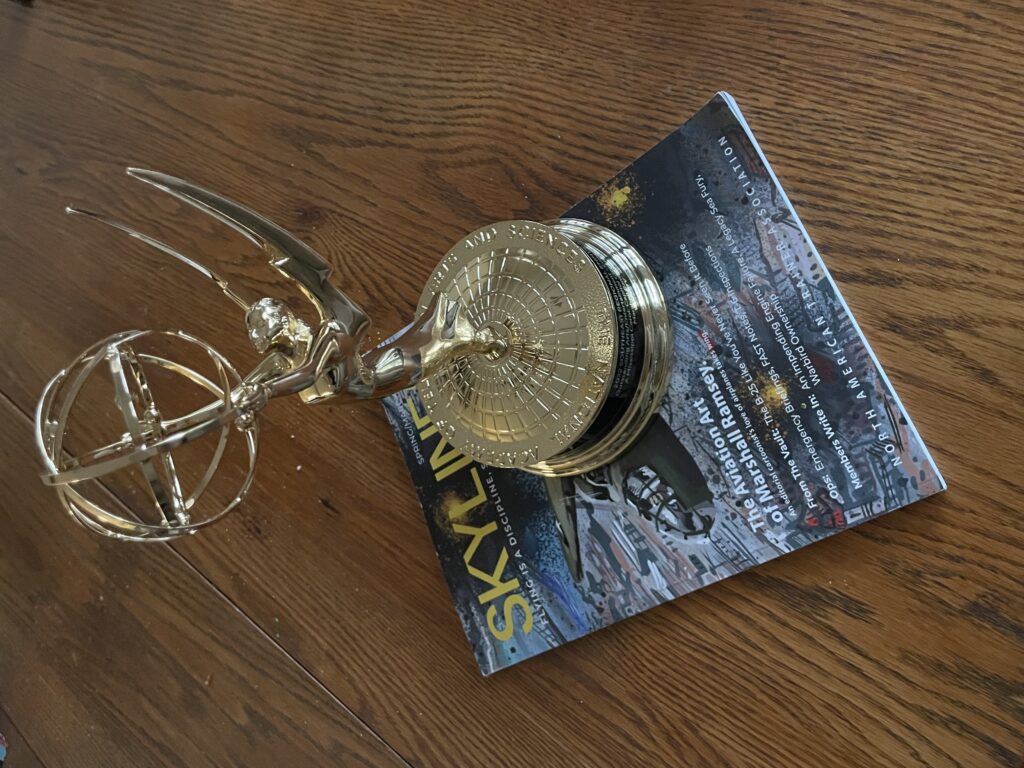
The mailman was good to me this week. I received my copy of Skylines Magazine, which features a 12-page spread of my work and my Emmy statuette. I will keep both in a corner near where I work at the house to remind myself that I can work outside of my self-perceived limitations.
And that true success is loving the work and being grateful for the results.
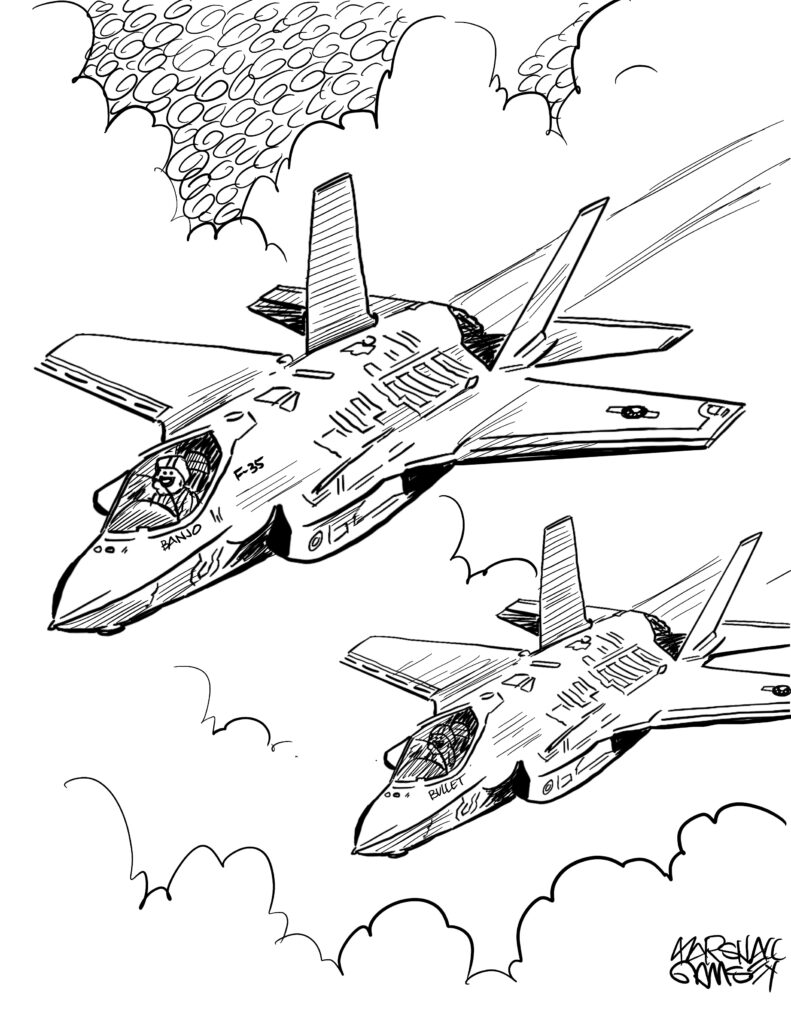
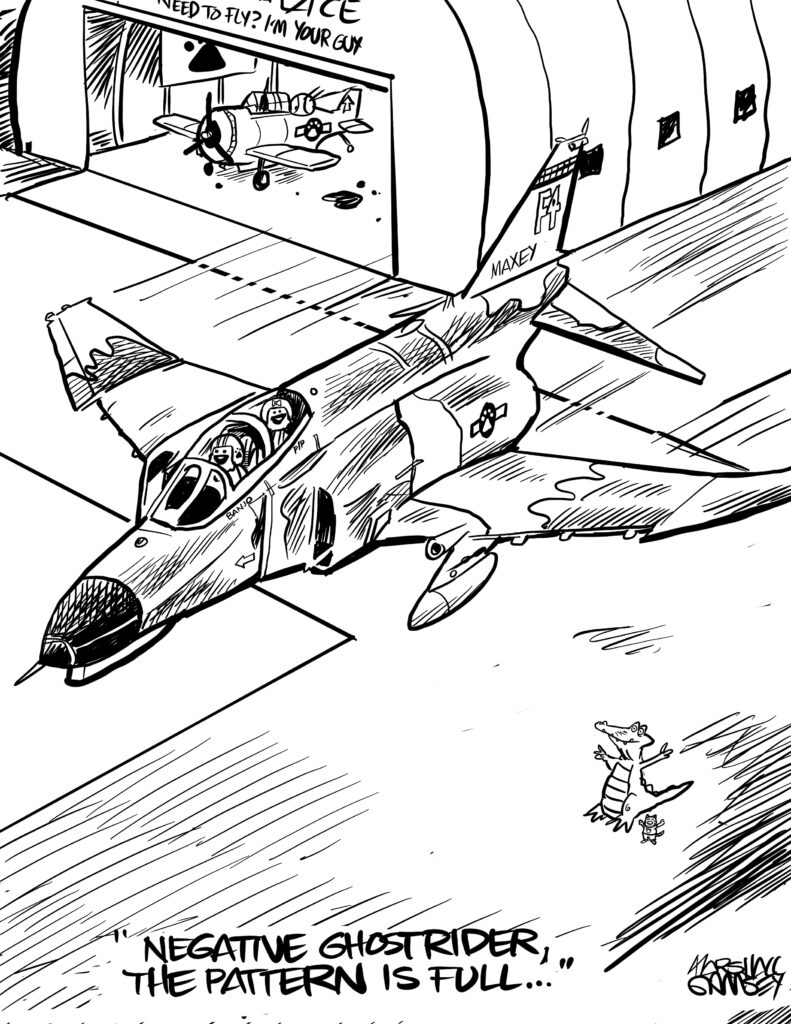
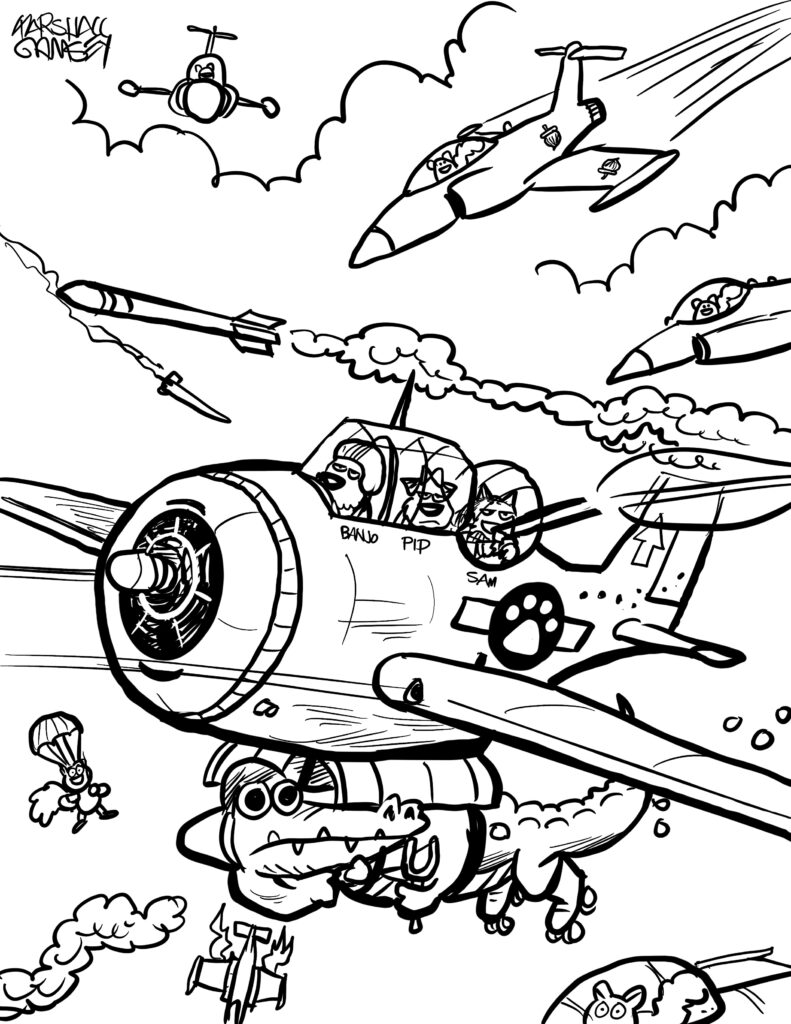
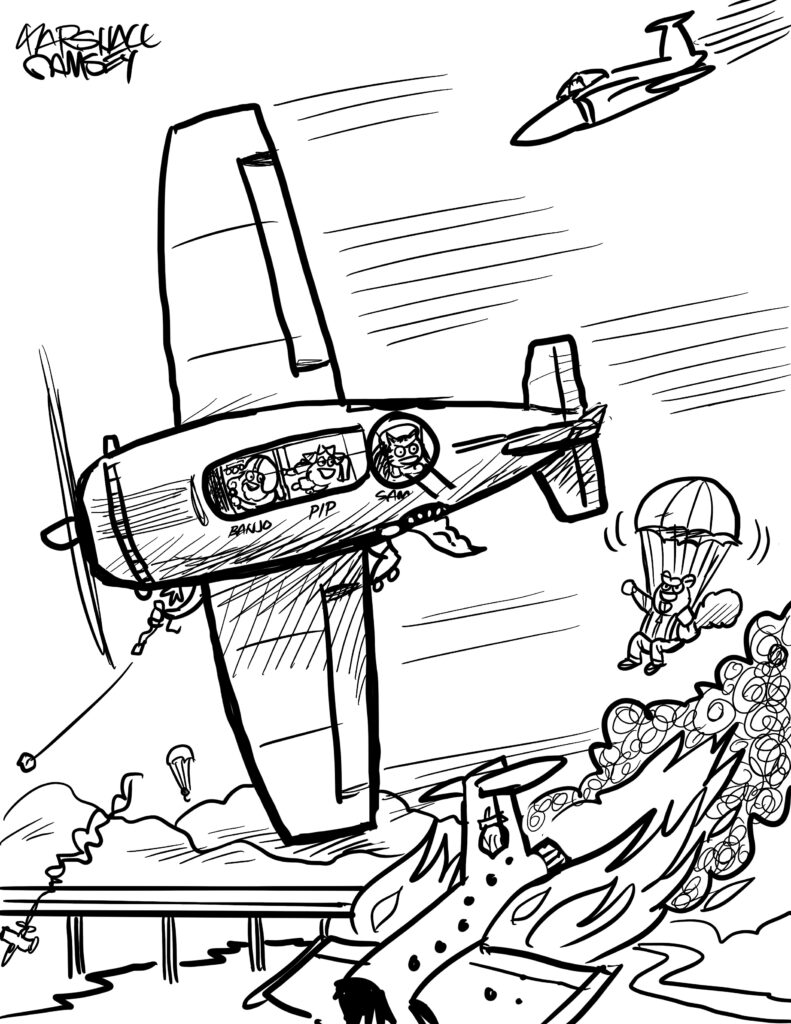
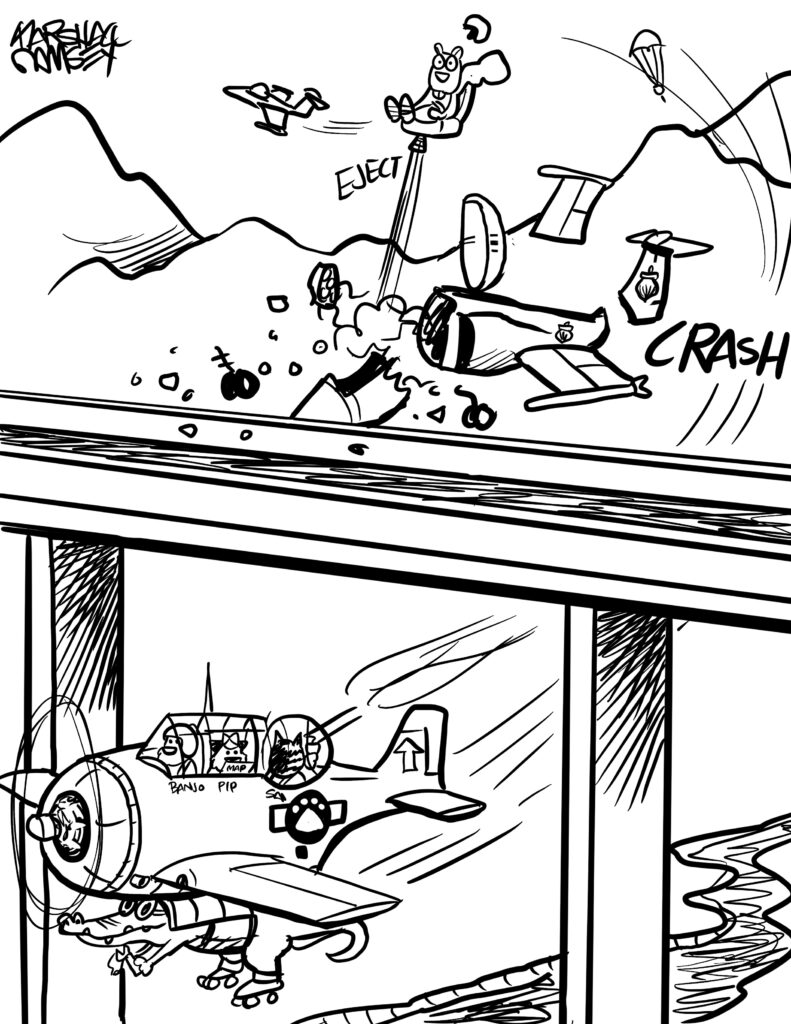
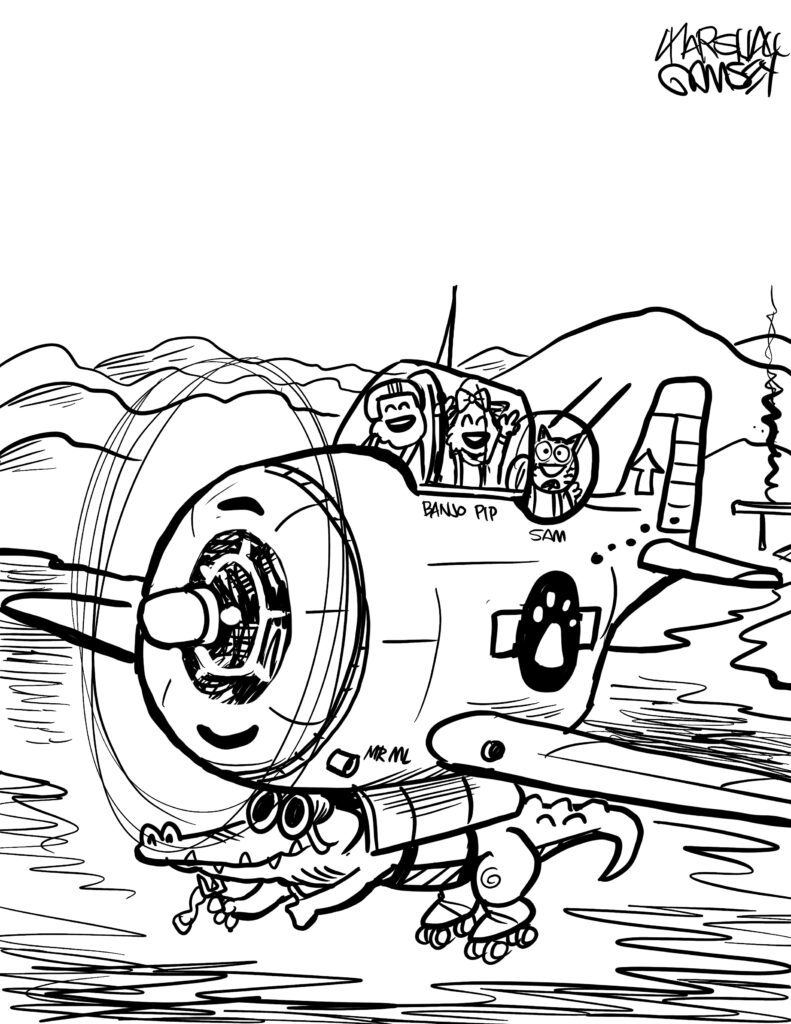
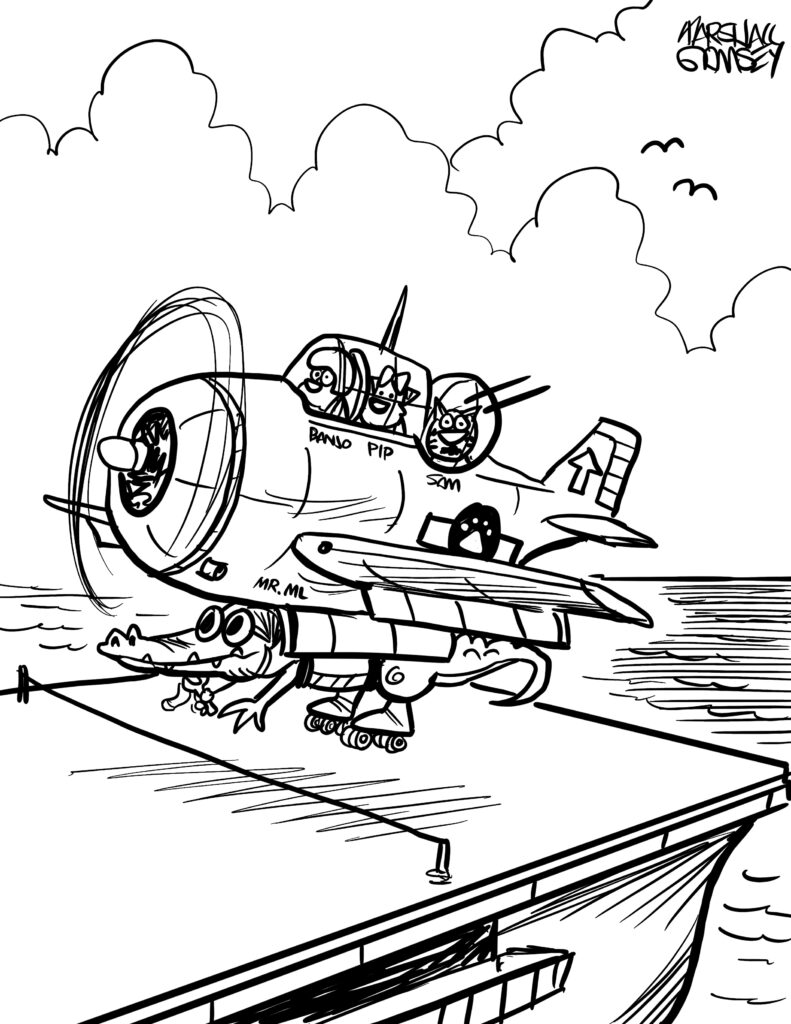
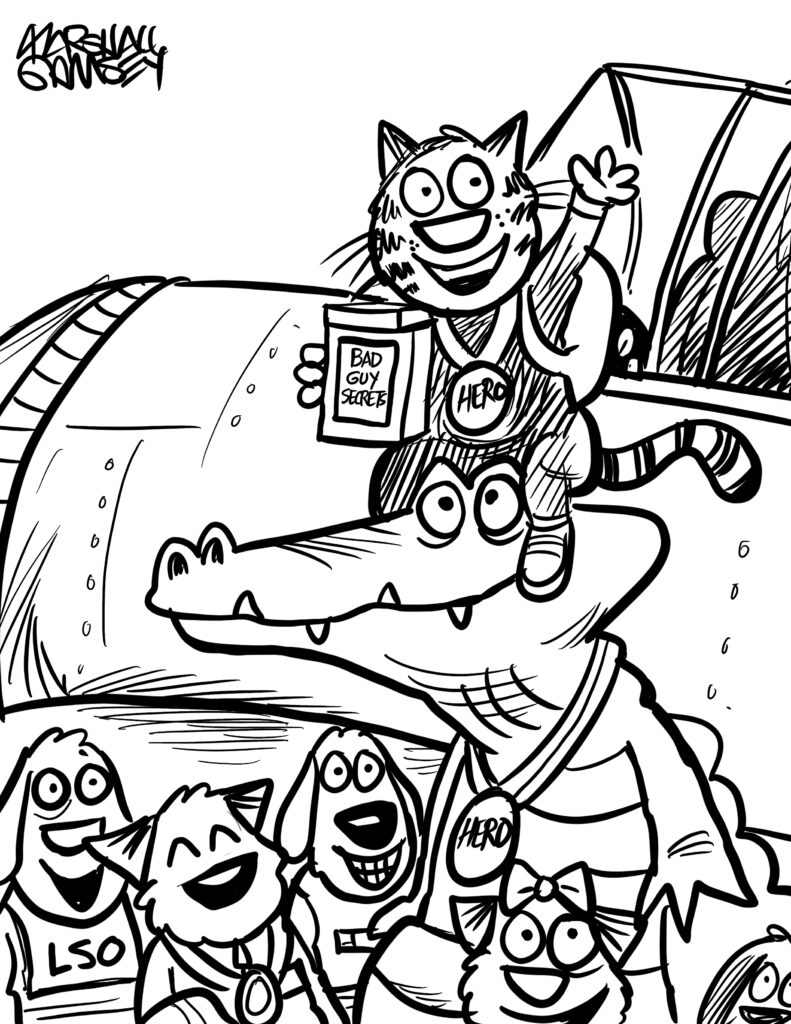
Banjo has a long history of flying all types of aircraft. Here are a few of them. And yes, he has been in a few dogfights.
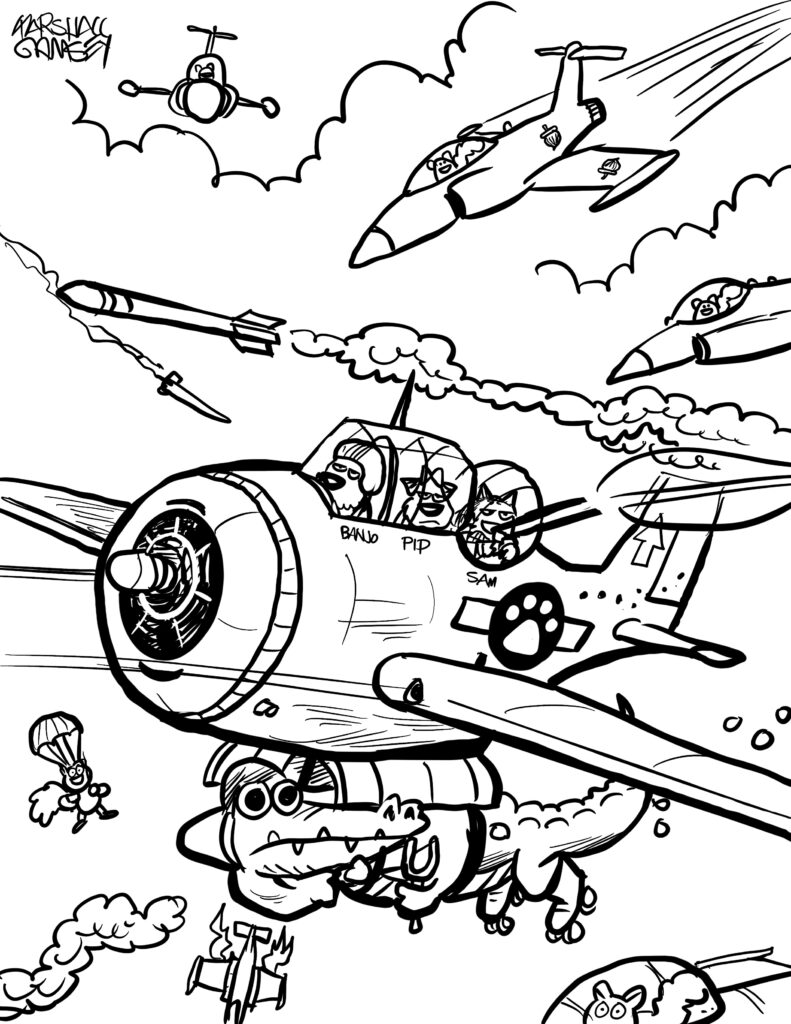
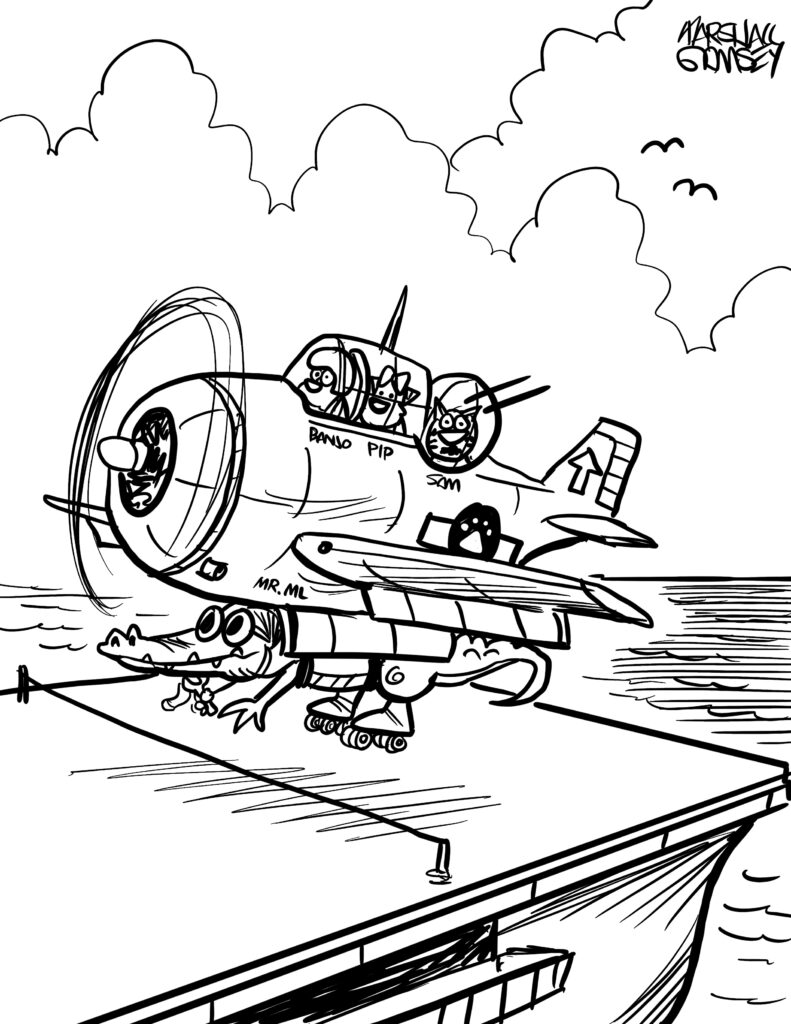
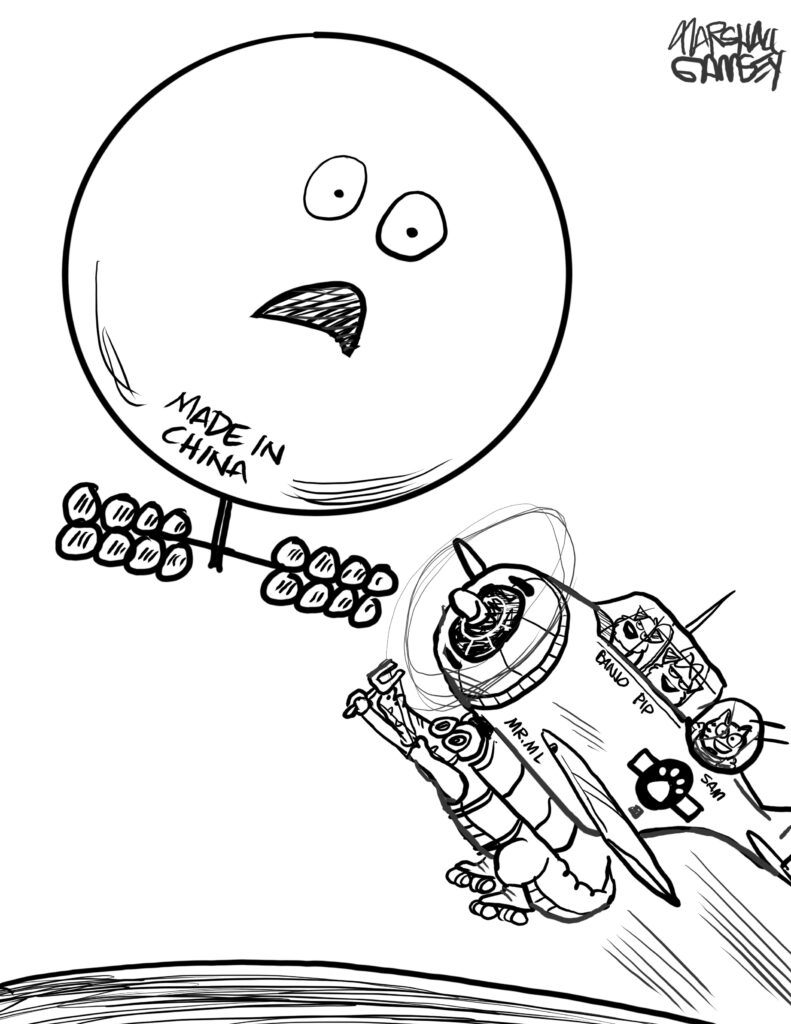
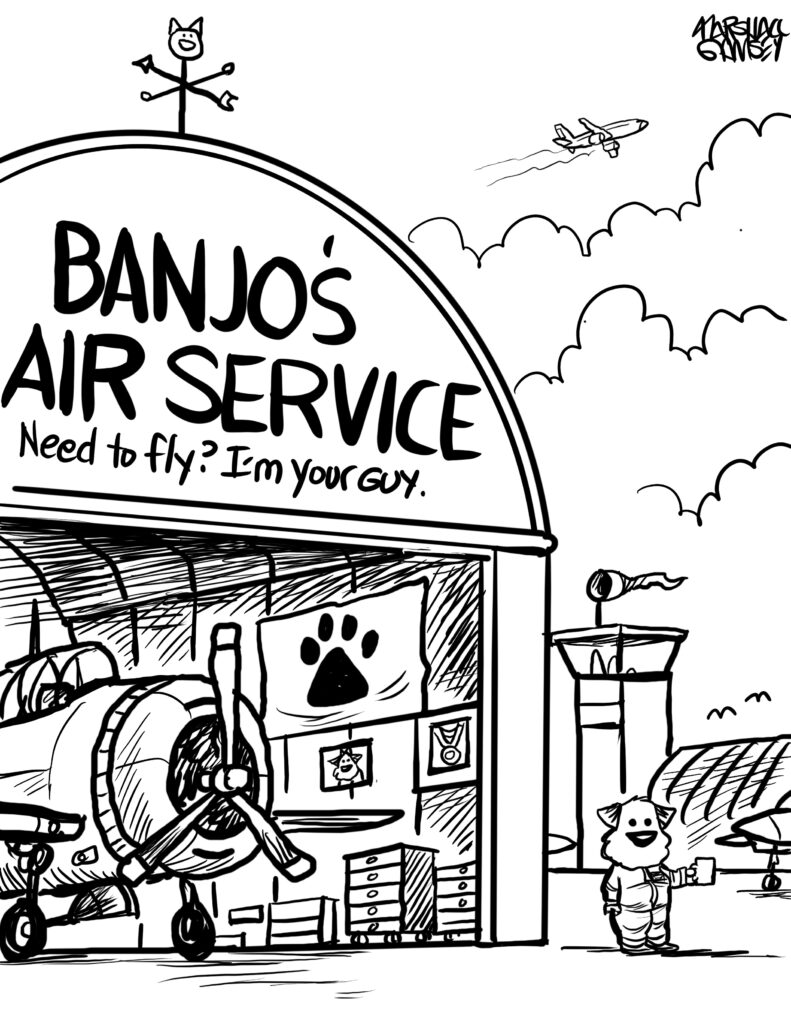
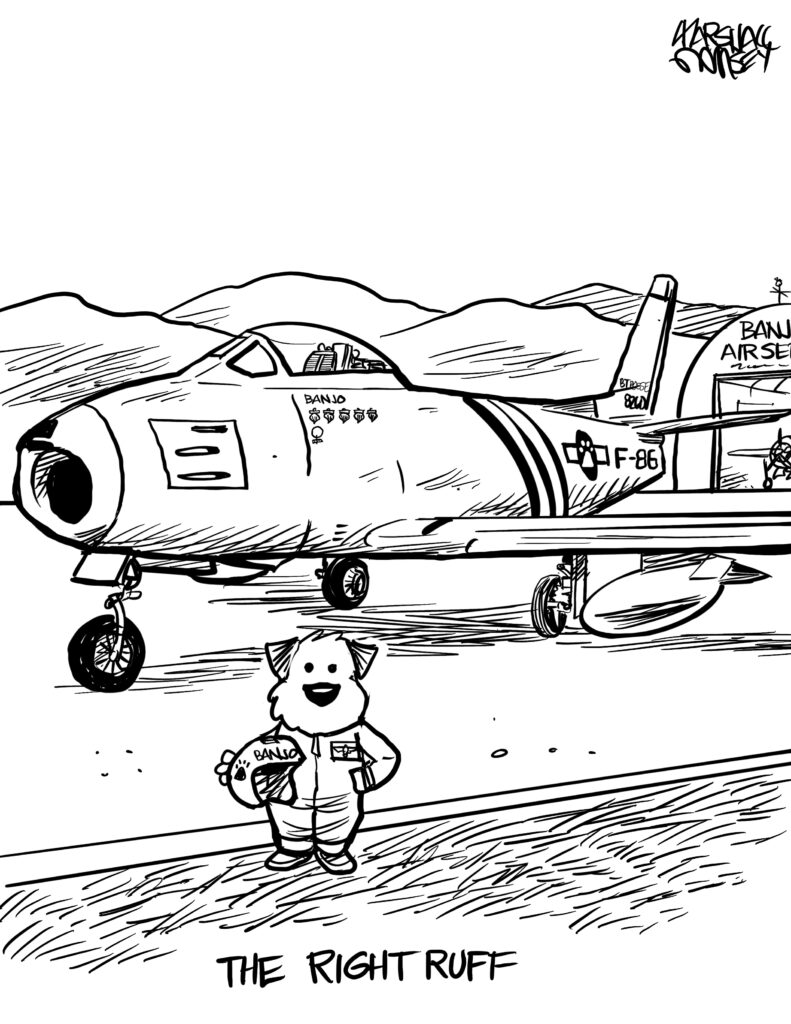
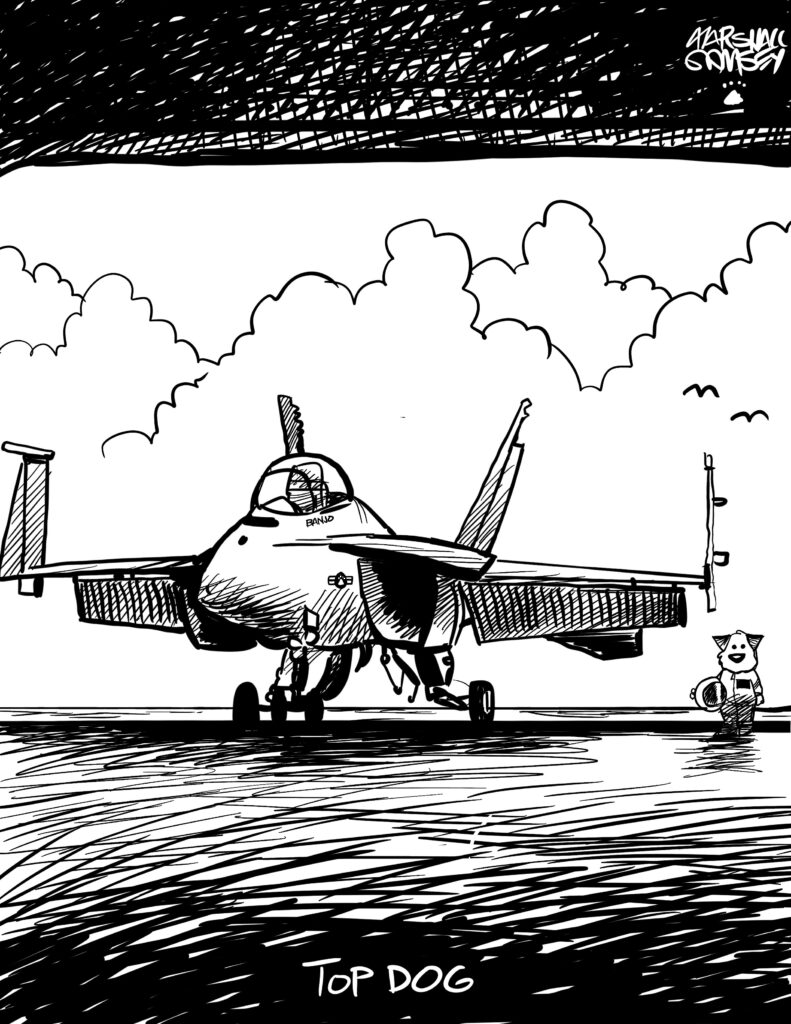
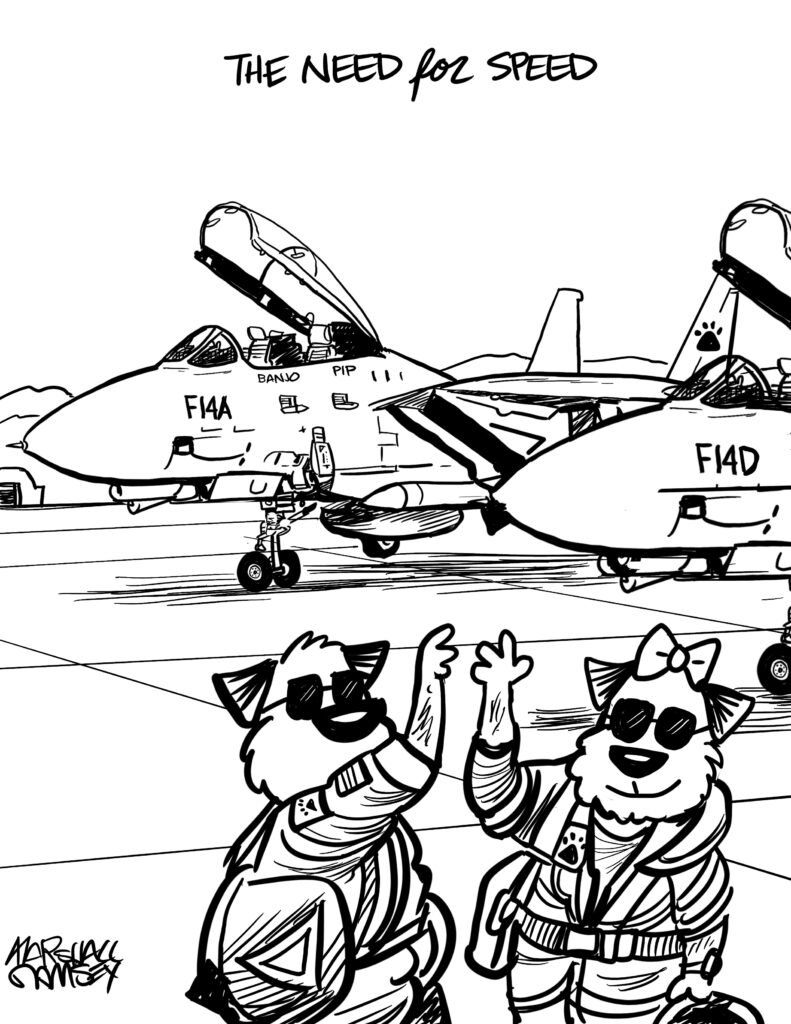
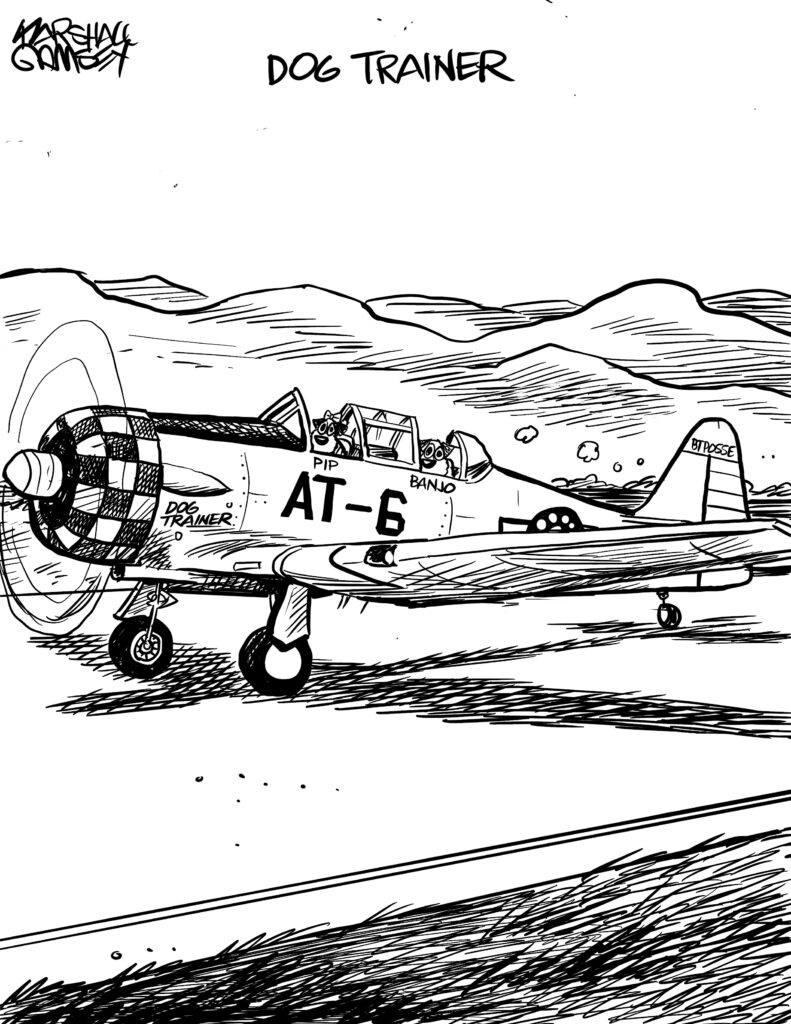
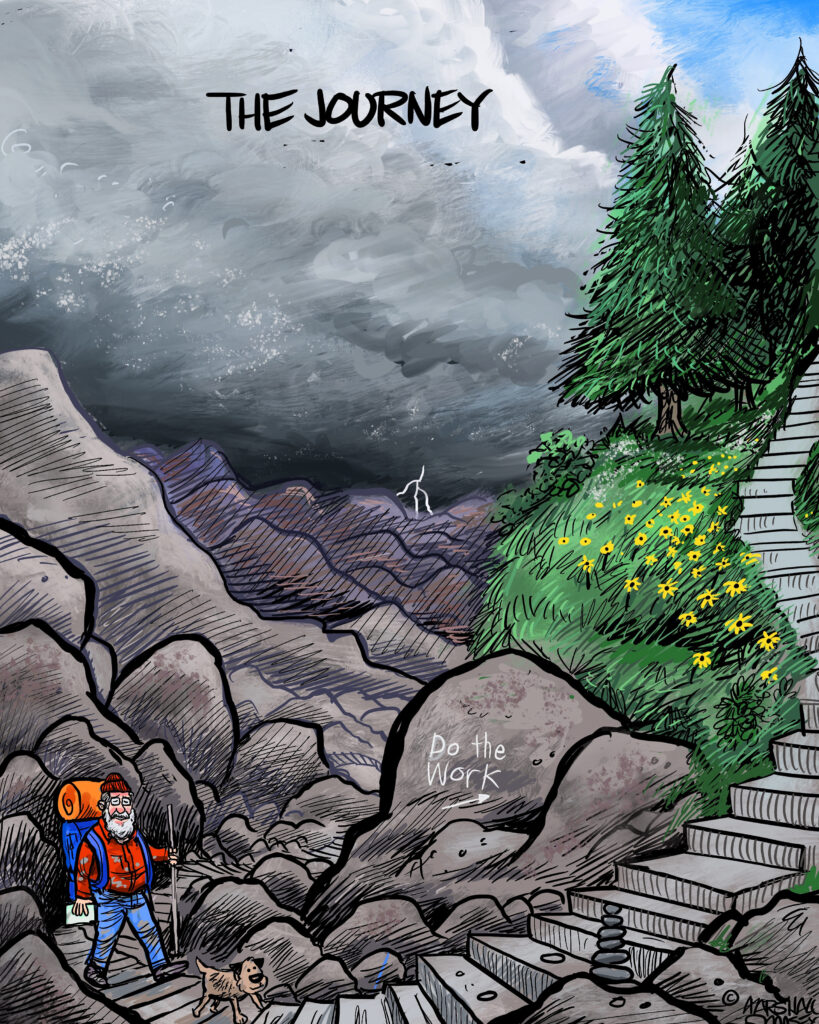
I’m sitting here, procrastinating on a project that I need to get done this month. I’m wired weirdly — I get a ton of work done. But sometimes I trip up and get overwhelmed. When I do — and right now is one of those moments, I think not about the destination, but the journey. The beauty is in the work.
When I die — and I’m one breath closer to it every moment of the day — I pray that people say about me, “He did the work.” As humans, that is about all we can do.
This drawing came to me while I was walking yesterday (12 miles — I had plenty of time to think). When a drawing flashes into my head, I immediately draw it. Although my faith is shaky at times, I know those are what I like to call “God moments.”
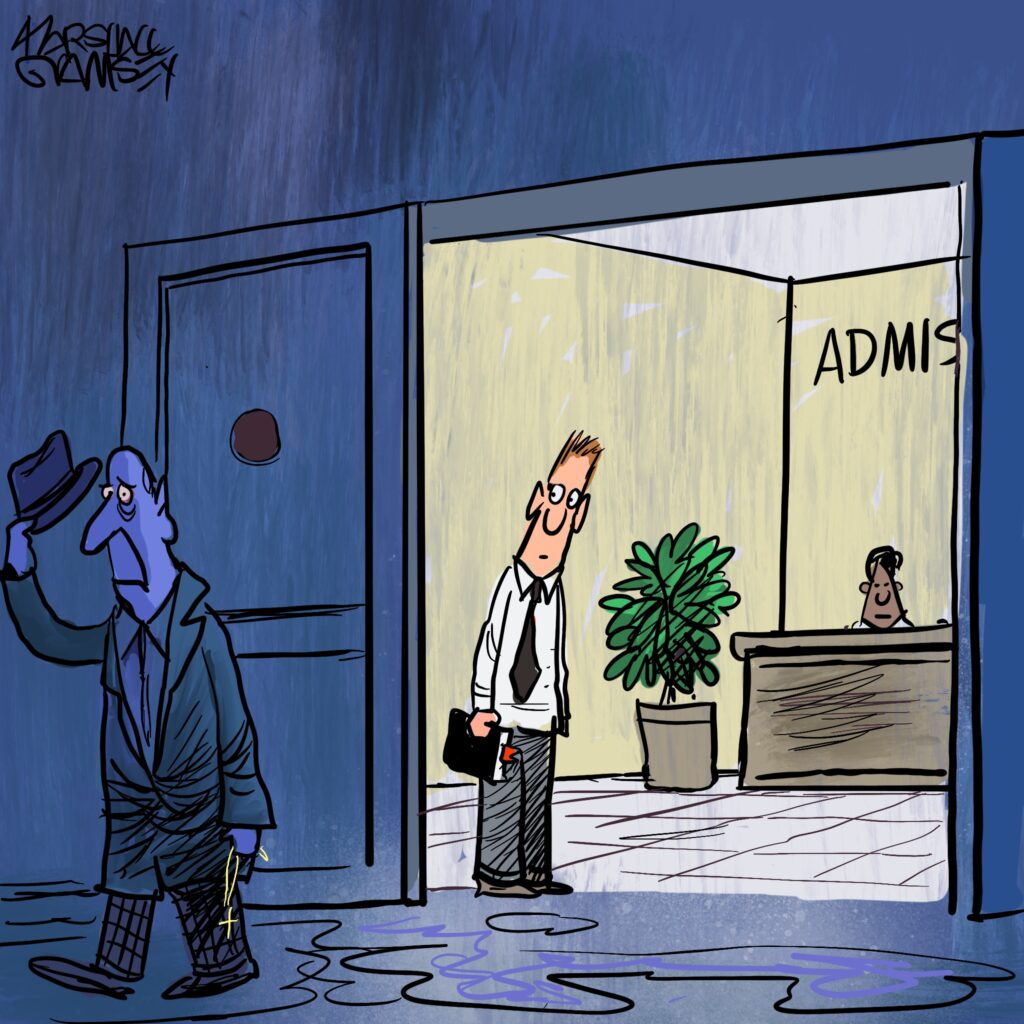
“You know Jesus?”
The man looked up at the stranger who blocked his path as he tried to exit the hospital. He gazed at him with bloodshot eyes as he gave him an answer. “I’ve spoken to Him a few times. But I never got an answer.”
The stranger tried to say something but the man cut him off, “but son, when you get to be my age, you realize that He doesn’t have to answer you. You just need Him to listen. Someone who truly loves you will do that. But I’m sure you know that. You seem to have all the answers.”
In his hand he held a cross on a chain. It had belonged to his late wife, who had died earlier that day in the ICU. He brushed past the proselytizing stranger and into the cold rain.
You’re snoozing on a flight. The plane’s autopilot is taking you safely to your destination.
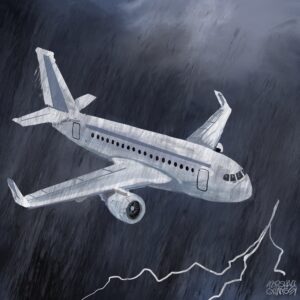
A sudden jolt wakes you up! The fasten-seat belt light dings as you look out the window. Storm clouds angrily boil as turbulence tosses the plane around like a ping pong ball in a tornado. A particularly hard jolt makes the plane groan — the oxygen masks drop from the ceiling! Screams mixed in with prayers ricochet throughout the cabin. Fear grips you — you wish you could self-medicate with the little bottles of booze the flight attendant was handing out. The plane begins to yaw to the right and starts to nose down. You look up and see the cabin door open — both pilots are incapacitated. Fear continues to keep you anchored in your seat.
The autopilot, which had not been programmed for this situation, is no longer doing it’s job. And while fear seductively tells you to just do nothing, you look around and see people you love. You take a deep breath, unbuckle your seatbelt and head to the cockpit. You find courage when you turn your attention outward, not inward.
Love pushes you forward.
Once in the cockpit, you move the pilot to the jump set and then sit behind the controls. There are so many buttons! You have no idea how to land a plane! You put on the radio and call for help, “Mayday! Mayday”
A calm, comforting voice comes into your ear. The flight controller, a pilot who knows how help you land this plane, starts to guide you through the switches and procedures. You get control of the plane and get it through the storm and then below 10,000 feet. The controller then helps you line up on the runway and safely bring your craft to Earth. You have not only changed your own destiny, but you have also made a difference in the lives of your fellow passengers — thanks to the friendly voice who guided you through the storm.
Yeah, I’m talking about mental health. We’ve all been on a bumpy flight lately and our autopilots aren’t working as well as they should. Don’t be afraid to seek out a friendly voice to help guide you through any storms you’re going through. Your fellow passengers will be glad you did.
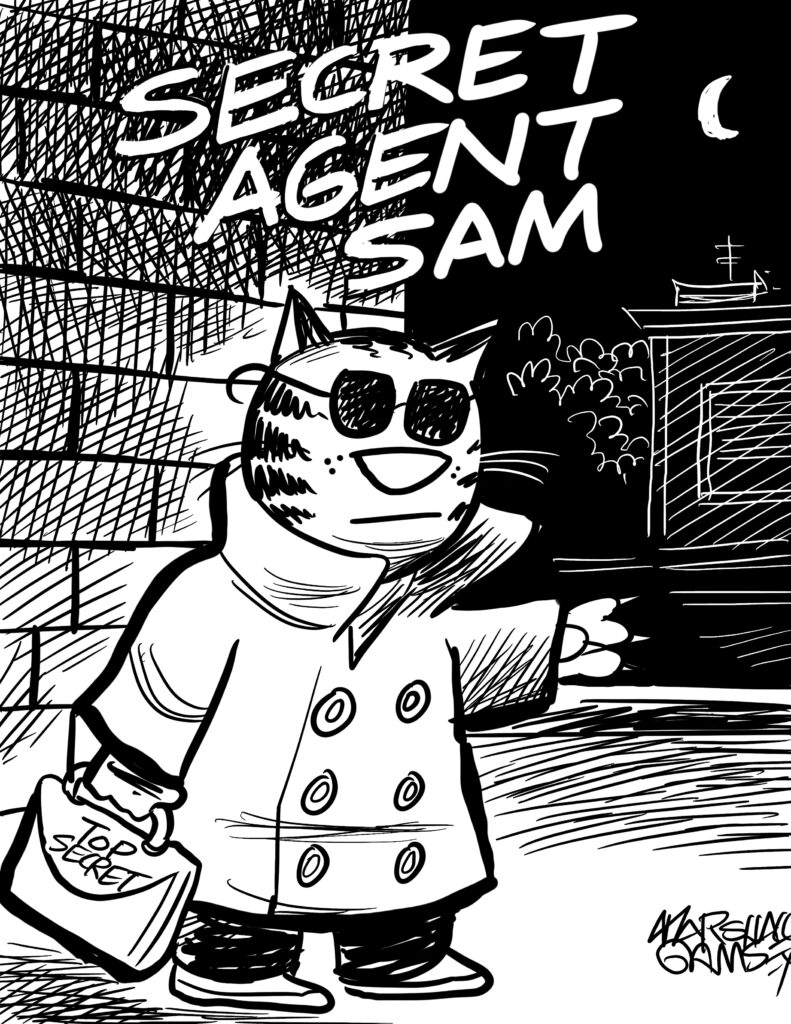
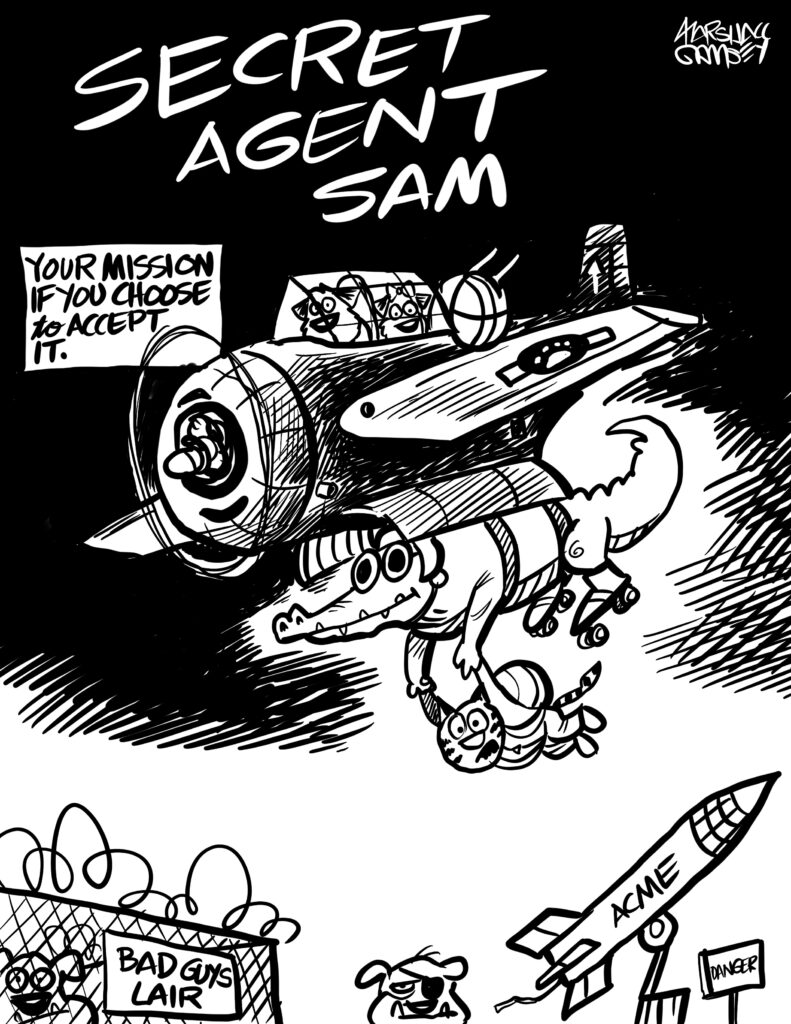
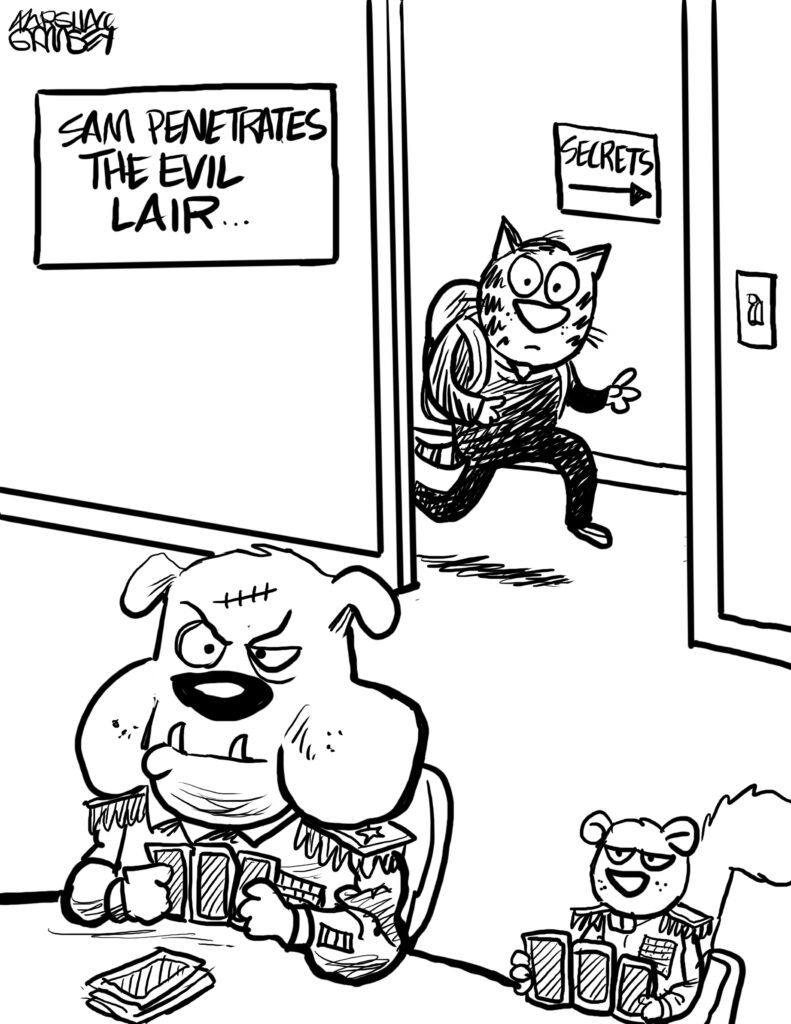
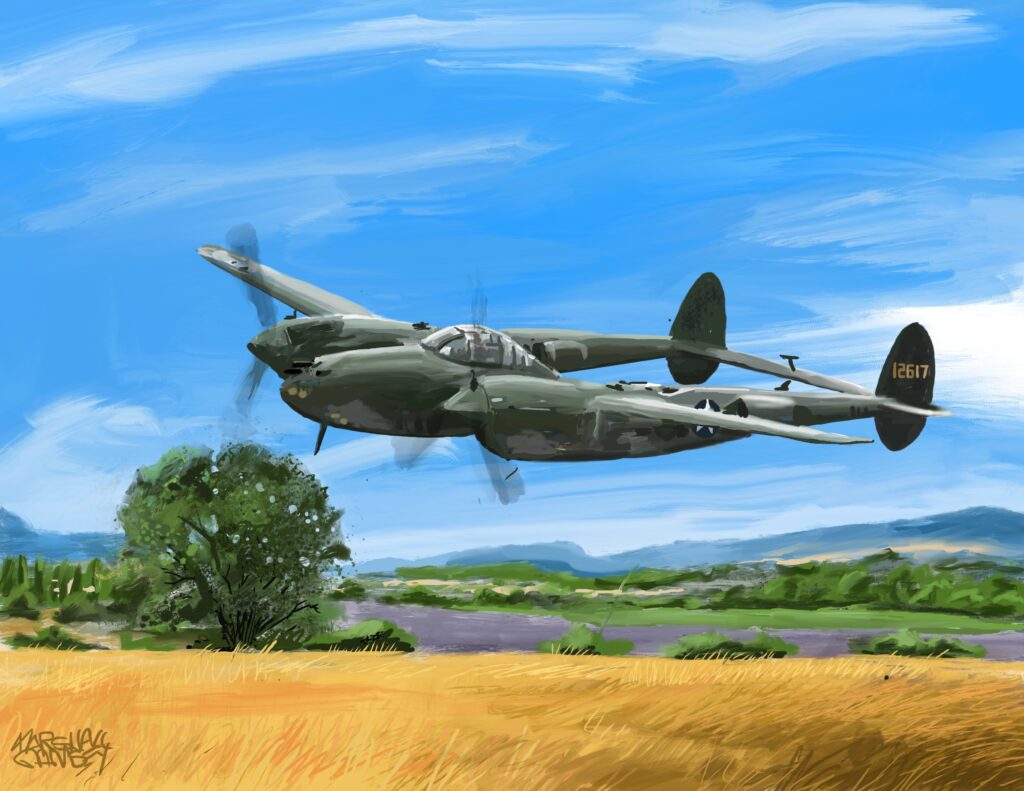
My dad’s first cousin Charlie worked on P-38s during World War 2. He had been a tail gunner on a B-26 (a plane not-so-affectionately known as a widow maker) but managed to transfer to a ground job. It probably saved his life. He was stationed on Okinawa until the end of the war. Anyway, the P-38 was one of Kelly Johnson’s most beautiful planes (along with the U-2, the SR-71 and the Super Constellation airliner). I painted it today flying low over a field in France. We always think of World War 2 as black and white — but I wanted to play around with the bright colors of the French countryside with the wheat flowing in the wind and flowers in bloom.
Oh, and there is a purpose behind all of these airplanes. I promise.
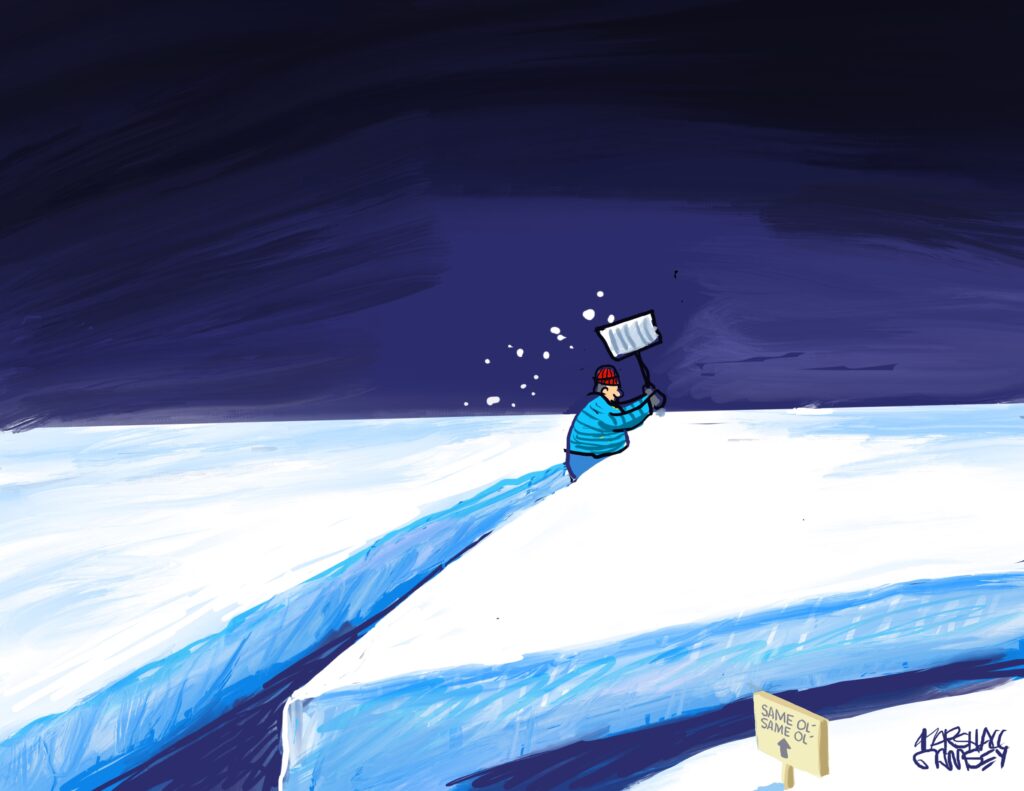
I read a great metaphor for the brain and its development. When we are young, the brain is like a field of freshly fallen snow. Over time, we develop ruts from the paths we take — particularly when we are young. If that path involved trauma, then you will continue to unconsciously follow that path (because it is much easier than walking through deep snow, right?)
The brain, which is an energy hog, always looks for shortcuts.
The challenge is to create new, better paths — which is possible — and take those paths until they become the easy routes. Therapy, medication, exercise, journaling, meditation — there are lots of ways to create new paths. But they all involve doing the work and pushing against what is “easy.” That can be hard. I can tell you from experience that walking through snow is exhausting. So give yourself some grace. Be focused with purpose and lead with love.
You’ve got this.