The Pacific Ghost

FlagThe sound of a motor awakened Stanley Wilson.

He hadn’t heard a motor in at least a decade.  Then it had been low-flying plane buzzing the island. Was this a dream? It had to be a dream. But it wasn’t — it was a dive boat heading straight toward him.

His eyes shot open.

“Oh God,” he thought, “Rescue!” He jumped out of his hammock and tripped over coconut shells. God he hated coconuts. He tried to straighten his hair, gave up and ran toward the beach.

“Rescue! It has been how many years now?” he thought.

But he didn’t know.

Stanley had lost track of time years ago. Every day was the same — well, except when typhoons roared in from the Coral Sea.  He had lived on that small island in the Solomon Islands since his raft had washed up onshore. The last real date he knew was 1943.  And judging by the wrinkles on his hands and gray in his beard, that was a long, long time ago.

The dive boat coasted into the cove, gliding toward the beach. The captain, a tall, tan man in his late 50’s, explained to the group, “We normally don’t dive on this island. The natives say there are evil spirits here. In the 40’s and 50’s, several divers came out here and never came back. But don’t worry,” the captain patted his pistol, “this will tame any evil spirits.”  The divers looked around at the crystal blue water and felt nervous.  It was rumored that this bay help several World War II wrecks and was haunted by the souls of dead Japanese.  American fighters had caught the Japanese napping and eliminated a small garrison of troops and their supplies.  Only one pilot was lost. The island was bypassed. And all the Japanese were dead.

Or so they thought.

One Japanese solider, Lt. Ei Yamaguchi had survived. Rising like a phoenix out of the ashes of burned huts, he buried his friends and vowed to kill anyone who dared touch foot on the island. And he did. He killed every person who came near it for nearly a quarter of a century — except for one man: The American he had seen float down into the sea. 

Lt. Ei Yamaguchi and Captain Stanley Wilson fought like mortal enemies for nearly a quarter of a century. They hunted and tracked each other like big game — until one of the strongest typhoons to hit the Pacific ocean nearly swept both out to sea.  Nature has a way of turning the tide of men’s souls.  The hunters became friends — until cancer took Ei Yamaguchi’s life in 1995.

Of course, neither knew the date to put on the gravestone.  A simple rock was all that marked a warrior’s final resting place.  And Stanley was left alone.  Very alone.

Until today.  He blinked his eyes as he looked at the boat glide toward the beach.  How many years had he fruitlessly lit signal fires? How many years had he prayed for this day to come? His gray, bony body walked out of the jungle and out onto the beach.

“Um, Captain, you’re not going to believe what I see,” one of the divers said pointing at the old man.

The divers, seeking relics, had found a the mother of all relics: A living World War 2 Marine pilot.

In a quonset hut in the city of Honiara on the island of Guadalcanal. 

“Let me get this straight…” the captain said, “You are a veteran of World War 2?  “The pilot looked at the old man and rubbed his beard. He did that when he was amazed. And it was hard to amaze him. “Oh, and you can call me Sid if you want.”

Stanley looked at the flatscreen TV on the wall. CNN showed images of what looked like spaceships zooming across the sky.  He was stunned at the cold air that blew out of the box in the window.  And there was a man across the room talking into a small, flat, black object.  What kind of strange place was he in?

Stanley spoke, “How’s the war coming along?” He was afraid to mention his Japanese friend. He didn’t want to be tried for treason.

“Afghanistan?” the captain said watching the look of confusion on Stanley’s eyes.

“No,” Stanley tersely said, “The war against Japan.  Are we winning?”

“Well, the captain said while rubbing his beard,” I drive a Honda.”

“So the Japanese won.” Stanley looked crestfallen. He knew that he would soon end up in a prison.

“No, Stanley. We won the war nearly 70 years ago. We dropped two atomic bombs and the Emperor surrendered.”

Stanley had no idea what an atomic bomb was. He was just trying to imagine a Japanese surrendering. “What’s the date?”

“June 2, 2014.”

Stanley gazed out the window. Tears began to burn his eyes.

“Sid, I’ve been on that island for 70 years?” he said slowly as he turned around.  The captain nodded. Stanley had already spoken more in the past 15 minutes than he had in the past 15 years. Now he was rendered speechless again.

“I’m really not sure how you survived for so long,” the captain marveled.  He had put in a call to a buddy of his who was in the U.S. Marines. “We need to get you caught back up with civilizations. Some of your old friends are coming to give you a ride home.”

Like a diver trying to get back to the surface, Stanley knew he couldn’t rise too quickly into the present.  As they waited on the Marines. the captain showed him how to use an iPad. Stanley savored reading again.  It took him about an hour until he could make sense of the words. But it came back slowly.  “Omigod,” he said. Just reading about World War 2 left his mouth hanging. He looked at the huge mushroom cloud rising over Hiroshima.

The next day, the captain put Stanley in a Jeep and drove him to the airstrip.  “Your Marine friends  don’t leave a man behind. And you, Stanley, have definitely come home.”  Both men watched as a giant C-130 cargo gracefully touched down on the small coral strip. It was the same strip he had taken off from 70 years ago.  A color guard in dress uniforms exited the plane and an officer beckoned him aboard. Now he was reentering a world he would struggle to understand.

A cemetery in Woodstock, Vermont.

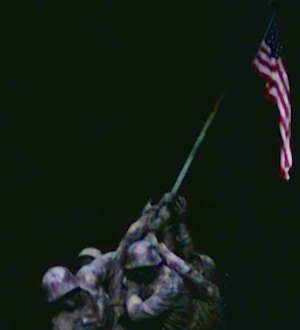
Stanley stood staring at the gravestones in front of him. There were his parents. His wife. His son. They had lived a whole life thinking he was dead.  He watched as the fall leaves tumbles and swirled around him.  The parade had been jarring enough — seeing the cars and the neon lights. Getting the medal from the Commandant of the Marine Corps was bizarre, too. He looked at the statue of the men raising the flag on Iwo Jima behind him. He had lost his best friend there and didn’t even know it. But that was not all that was hard to understand. Flying on a jet at nearly the speed of sound. And then there was the Internet. Oh boy, that was a mindblower.

Stanley just looked at the stones and sighed. He had had his whole life stolen from him.  And so had Lt. Yamaguchi, too. He had found his friend’s family in Yokohama, Japan.  At least his friend would be going home, too.

But what kind of home was this? Who did he have left?  He had watched the movie Castaway in the hotel room.  He could relate to Tom Hanks’ character losing Wilson and the love of his life.  He should be in this graveyard, too. Now he was just a zombie in a life that wasn’t his.

As he stood there quietly wondering what was next in his life, a black BMW pulled up to the graveyard.  “Did we lose to Germany, too?” he thought as he looked at the German luxury car. Out stepped a 45-year old man and a little girl. Both ran toward him. The man looked surprising like he had so many years ago.

“Grandpa?”

His son had had a son. And his name was Stanley, too.

“Grandpa, is that you?” he repeated. Stanley stuck out his hand. The man grabbed him and hugged him tightly.

“I’ve never hugged a ghost before.”

The little girl hugged him, too. Stanley looked at the Tiffany-glass Jesus in the church window.  Seventy years of prayers had finally been answered.

Stanley lived out the rest of his years in Woodstock with his family.  He learned to love the Internet and his great granddaughter Annie. He craved steak and avoided seafood every chance he could.  And refused to drive Japanese cars and vowed to never touch another coconut again.


Posted in Writing | 1 Comment

Fit2Fat2Fit Blog: May 27, 2014

10369912_10154209734225721_7778159841200187768_nThe sun flickered across the reservoir like a tongue of fire. The humidity was thick and my legs felt thicker. I really didn’t feel comfortable until mile two — and by then, my legs had rubbed raw. But I kept pushing.  Ten miles later, I sat and recovered.  Between the soreness from leg day and my new rash (yes, that was me buying diaper rash creme at Kroger), I walked like I was 100 Saturday night.

Sunday I slept. A lot. It was a nothing kind of day.

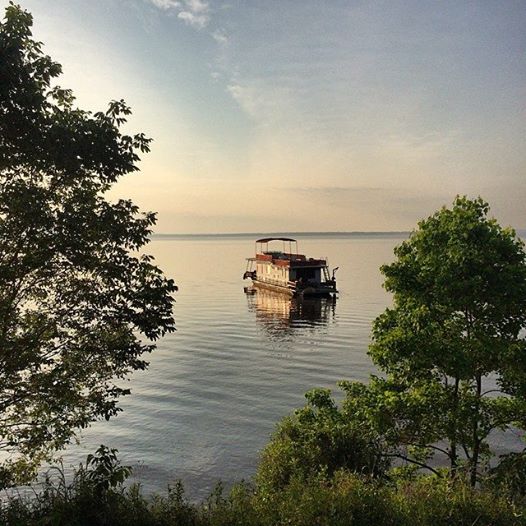
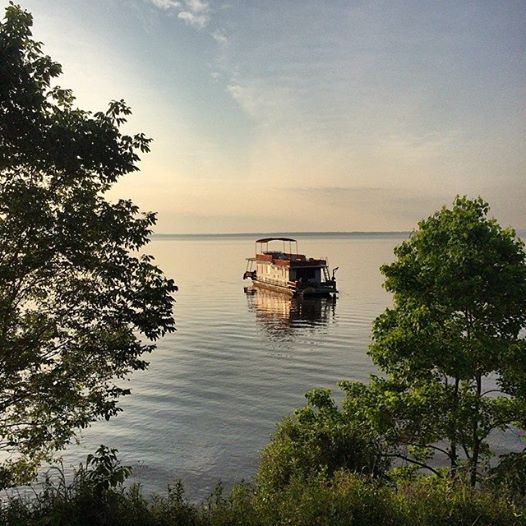
Monday, because of not being able to find my wallet (and driver’s license), I ended up missing my 5 a.m. workout — so I ran eight miles.  Once again, I was running along the Reservoir, admiring the sunrise and the scenery.  A houseboat sat in the water, ready for a day of fun in the sun.

This morning, I was rash-free, knew were my wallet was and got up when my alarm went off.  It took the whole 15-minute drive over to the stadium for me to get into the proper spirit to workout.  It was a shoulder workout in the gym and then we went out and did a lot of running.  My line (Line 2) is made up of some very fast people. We did the Indian run — I was worried I couldn’t keep up. But I did and it turned out to be one of my favorite things we did today.  We also did the heave and retrieve with the weighted medicine ball and Clark put us through a solid core workout (how does he do that over and over and over?) We did stations today, too. Running with a weight over my head makes me look foolish. It also makes me feel weak.

But I’m not weak. I’m tired, but I am not weak.

I have the strength to push through a really insane work schedule and can handle stress better than I could when I was 18.  All because I workout.

Look, I am not a great athlete. But my athleticism allows me to be better at everything else I do in life.

Well except for running with a weight over my head. I really do look foolish doing that.


Posted in Fat-Fit-Fat | Leave a comment

MRBA Free-For-All

Good morning! Hope you’re having a great Memorial Day!

A house boat awaits today's Reservoir party.

A house boat awaits today’s Reservoir party.


Posted in MRBA | 125 Comments

Arlington

72423_10150325090875721_594630720_15511103_2918901_n1Because of the pain killers, the travel time between Afghanistan, Germany and Walter Reed National Medical Center seemed like it took 10 minutes. Lieutenant Frank Lowry IV dipped in and out of the fog of a narcotic consciousness. The last true memory he possessed was diving on a Taliban grenade. The rest, well, the rest were just a series of fleeting images and sounds. He remembered the padded ceiling of the medical Blackhawk. He remembered being on the tarmac in Bagram Air Force Base. He remembered the lumbering C-17 transport plane and the Mississippi accent of the pilot. And he remembered the cold darkness — a chill that enveloped him when death entered the room.  He thought of his son, Frank V. He thought of his beautiful Meg. He could see the flag being handed to her at Arlington National Cemetery. He could see the tears streaming down her soft face.  His memorial would be on Memorial Day.

Stop it. Must. Remain. Positive.

Beeps and hums cut through the drugs. He was in ICU — or at least he thought he was. He had lost massive amounts of blood high in the Afghanistan mountains on that early May day.  Blood stained the snow; his blood.  A Medal of Honor was now in the pipeline for Frank.  The only question was this: Would it be posthumous? Would his country sign the blank check he had written? Blackness entered the room again and Frank felt his life starting to slip yet again.  His heart labored to keep him alive.  He was now fighting a battle far tougher than any he had fought as a Navy SEAL. He started falling into the darkness. And then a pinprick of light opened up beneath his feet. Small at first, it opened to swallow his soul. The sensation of falling ended as rapidly as it had begin. He was standing on manicured green grass surrounded by a garden of stones.

“Beautiful isn’t it?”

The voice jarred Frank slightly.  He looked around and saw no one.  But he couldn’t help but notice how vivid the colors were. The sunrise over Washington was amazingly vivid. Mist hugged the ground.”

“I thought the same thing when I saw the South Pacific for the first time. Never have seen a sunrise like it since.”

Frank swung his head around again. Still no one.

Then, like an apparition, a man appeared beneath a giant oak tree.

“Welcome to Arlington, Frank.”

“How do you know my name?”

“Because it’s my name, that’s how.  I am Frank Lowry the first. And if you look over there, you will see my grave.”

Frank looked over at the tombstone. It read, “Sgt. Frank Lowry USMC  Born 1918- Died April 1945

His great grandfather, a Marine medic in the First Marine Division had died on Okinawa. He had singlehandedly stopped a last minute Japanese Bonsai charge on his position when he picked up a fallen Marine’s M-1 rifle. For that  he was awarded the Silver Star, the second highest combat decoration.  He left behind a wife and a son he had never met. That son fought in Vietnam. His son fought and died in the Gulf War. And now Frank carried on the family warrior tradition of saving lives.

“I understand you’re some kind of hero.”

Frank couldn’t help notice how much he looked like his grandfather. Old age had been stolen from the Marine. They were about the same age.

“I want to introduce you around. We have lots of heroes here — but only a handful of Medal of Honor recipients.  You’ll be quite the hit.”

Frank looked at his great grandfather. “Medal of Honor? What are you talking about?”

“I guess you haven’t heard.  You’re about to enter select company. Less than 3,500 Medal of Honors have been presented.  Admirals will now salute you, boy. You saved many souls the day you were wounded. Wait until I introduce you to President Theodore Roosevelt. You know he’s the only President who has received the Medal of Honor?” His grandfather pulled an apple out of his coat pocket. and  took his K-bar knife and began to peel the apple.  “Anyone can take a life. But a true warrior knows when to save one. You, my boy, are a warrior.”

Frank looked down on the city of Washington, DC.  He remembered taking his son to the zoo and the monuments. How they had gone to the Smithsonian and seen a plane like his own father had flown in the Air Force. “That’s Grandpa’s plane,” Frank’s son shouted in a mixture of glee and pride. The Lowrys were all about service. And they were about sacrifice as well.

“So, you want the tour? Or do you want to go back?
Frank looked around at all the tombstones. How many of them had been given such an opportunity? How were given a second chance? He thought of little Frankie. And then he thought of Meg.  And then he saw all the other heroes standing next to their graves.

“I’ll always be waiting here for you.  And so will he.” And out of the mist, a man in a flight suit appeared.

It was Frank’s dad.

Frank ran and hugged his father. He looked at him and tried to say everything he had wanted to say to him for the past 23 years. But his father wouldn’t allow him to speak. He just squeezed him and said, “It’s OK son, I know. I have been watching out for you. It’s not your time. You have to go back and raise your son. You have to teach him what our sacrifice is all about. You have to pass on the warrior tradition.”

“But, Dad…”

Frank felt his body convulse again. The idyllic scenery of Arlington ripped away  from him.  Lightness suddenly went back to black.  He felt another shock that ripped open his eyes.

“We have a pulse!” one of the doctors yelled. Another doctor pulled the paddles from his chest and smiled.

Frank had reentered the world of the living. The beauty of Arlington transformed back into the sterile ICU of Walter Reed. He looked up at the doctors, stared at the man who had just brought him back to life. Frank thought, “Thank you.” He still had some living to do.

He looked at the doctor again.  The man winked and said, “You’re welcome hero.”

It was his Great Grandfather.


Posted in Writing | 1 Comment

Fit2Fat2Fit Blog: May 22, 2014 — The Next Level

title-12-week-lrgI think my low point was in January 2012.  The wheels had come off my career in November 2010, causing me to both physically and mentally break down. I was working two jobs, was trying not to get fired from either and was losing touch with my family (who had been deeply affected by that fateful day in 2010.) I don’t even remember my sons’ teachers names from that year. My body and mind thrashed against a current of negativity that was being spewed at me. By January 2012,  I was fat (248 lbs.), angry and honestly, depressed.

My wife did an intervention of sorts. She had met Paul Lacoste at the preschool where he sent his son.  I got a call from Paul in January and signed up for his Fit4Change boot camp at Jackson State.  I had run a marathon in 2010. But by 2012, I would get winded walking from the parking lot.  I’d look at my 26.2 sticker and be embarrassed.  I was exhausted the day Paul Lacoste called me. Hell, I was always exhausted.

Paul arranges his bootcamp by lines. Line 1 is the best, most fit athletes. I was in line 8 — and I still nearly died the first day.  My 41-inch waist would drag on the floor.  I barely survived the treadmill.  I couldn’t even run a mile.  A sit-up was nearly impossible.  He’d keep talking about the “Next Level.” I thought it meant physically.  My next level would be the one directly above the bottom — because that was where I was. The rock bottom.

Two weeks into Fit4Change, I hated it. In fact, one morning, I played hooky just to run in my neighborhood. I couldn’t take the pain and the yelling. My mind, already depressed, was in a dark place. And then Paul threw me a curve. He moved me to Line 2.

I nearly freakin’ died.

It has been a two-year journey. I quickly learned that my body could achieve amazing things — once my mind got out of the way.  I quickly shed pounds and gained fitness. By the end of the first session, I had lost 45 lbs.  And I had started to rebuild my mental confidence.  I realized that “The Next Level,” isn’t just physical. It’s also mental.

In the book Creativity, Inc by Ed Catmull (the co-founder of Pixar), he talks about how our senses are not capable of taking in all the stimuli around us.  To compensate for this, our minds create models to smooth out that data and fill in the gaps.  It’s like a weather forecast model that takes data and tells you what the weather will be.  Those models are created by past experiences and don’t necessarily represent “reality.” Our brain, through habits, works to make life easy for itself.  My model was that I could not push a board or run on a treadmill. So guess what, I struggled with it.  I did not start having breakthroughs until I, as my old football coach in high school would say, “got my mind right.”  You won’t succeed until you believe you can.

Today, we pushed pushed boards on a dry field.  That’s about as hard as it gets during PLS.  But because I had done it in the past and could visualize my success, I breezed through the exercise.

That’s what I have learned from my five sessions with Paul Lacoste.  Yes, he yells and fusses. Yes, it is hard. And yes, I am in excellent physical shape.  But something more important has happened. I use the same lessons I’ve learned while training for the rest of my life.  I am currently working on changing the models in my mind that have held me back.  My anger is gone. Forgiveness has replaced it. I know I can do anything I put my mind and body to. I believe I can succeed — because I have. I do it every morning at 5 a.m.

I had to tear myself down and rebuild myself physically and then mentally.  And I have.

That’s what the Next Level means to me.

Posted in Fat-Fit-Fat | 2 Comments

SHORT STORY: The Lesson

FlagBuilt during the Great War, refurbished during the Gulf War, the college History building smelled like dank wood and hopes of a better future.  Inside one of its lecture halls was an mini-session American History class (down to seven members because it was the Friday before Memorial Day.)  The average age of the students was 18 — except for one outlier. His name was David Lowe and he was 25 years old.  One of the other students had known David years before when he hung out with his older brother. But he had known a younger, wilder David Lowe. This one was different. Quieter. More focused. Serious. Almost distant.

The bell rang and the professor came in carrying a battered leather briefcase full of marked-up test papers.  “The good news is that we have Monday off. The bad news is you had better be studying. Your test grades were TERRIBLE. Well, except, yours David.  Another A for you.”

The professor’s clothes were ill-fitting and tattered.  He had a closely cropped gray beard and if he had been wearing a short-sleeved shirts, some of the students might have noticed a “Semper Fidelis” tattoo on his right forearm.  The professor had seen the world starting in Vietnam. Now he was at this small Midwestern College enjoying peace and his well-deserved tenure.

Groans emitted from the other students as the professor handed out the quizzes. “It’s obvious to me, you completely missed the point of my lecture on Memorial Day.  Because I am so nice and it’s the day before a holiday, I am going to let you stand up before the class and talk about what Memorial Day means to you for extra credit. Who’s first?”

Adrianne, a pretty blonde with glasses, walked up to the front of the room.  She had excelled in High School and was at the college on scholarship.

“Memorial Day is a day off for me.  I will be going to the beach with my friends and I look forward to starting my tan.”

The professor rolled his eyes and called up the next student named Clay. Clay brushed his black hair out of his face and began.

“I get to sleep late.  Me and my buddies are going to buy some beer and drink it until it is gone.”

The class laughed.  The professor called up the next student.

“Hi, I’m Sam. I’m going to cook out with my friends. Memorial Day is about friends.”

The professor nodded as he called up the next student. And the next student. And the next.

He then got to David.

David limped slightly as he walked up to the podium. He looked out at his classmates with tears in his eyes.

“Memorial Day is about sacrifice.  It’s about men and women giving our country blank checks and then having them cashed.  Without those sacrifices, you wouldn’t be able to sleep late, drink beer, work on your tan and be with your friends.” David paused. He really wasn’t  lecturing his classmates. He was just trying to make them understand. “Speaking of friends, I can’t be with mine because of a really bad day.” David lifted his pant leg, revealing a prosthetic. “I lost this. They lost so much more.”

He turned, looked at the professor and said, “Semper Fi,” and sat down.

The class stared at him stunned.

The Professor smiled and said, “Semper Fi, David. And thank you for your service.”

The rest of the class all turned and thanked him as well.

Without knowledge, it’s hard to properly memorialize.  And in one small college classroom, David Lowe’s friends’ sacrifices in Afghanistan would never be forgotten.


Posted in Writing | 3 Comments

Fit2Fat2Fit Blog: May 21, 2014

title-12-week-lrgA great attitude is like bacon. It makes everything better.  The trick is, how do you get through at day when your attitude isn’t as good as it should be? The secret lies with those who surround you. 

Mine has been, well, not as great as it could be.  I guess that is normal — you can’t be “on” all the time.  If we had to rely on whether or not we “wanted” to work out, we’d probably quit after a few weeks.  But we keep at it because it becomes habit.

Habit has definitely kicked in this week.

That said, a great attitude helps you get the most out of whatever you are doing. Paul Lacoste’s Boot Camp is no exception. You go into it with a great attitude, you will see amazing results. Bad attitude? You will suffer the whole 12 weeks.

I came into today worried about my Achilles tendon. (Now that will cause a bad attitude.)  I stretched it and stretched it some more. I was loaded up on ibuprofen and had iced it the previous evening. I warmed up with a 1/2 miles of running and stretched it come more.  We did warm-stretches and then went into the weight room to work on shoulders (my shoulders are my weakest muscle group, so I am always thankful for shoulder day!). From there we did shuffle/sprint/shuffle drills. Not Achilles tendon friendly. Then we did ladder drills. Not Achilles tendon friendly. Then we carried a 25 lb. weight around a box 1/4 the size of the football field. Definitely not Achilles tendon friendly. We finally wrapped it up with three wall stands (on our hands with a push-up) and up-hill sprints. Not sure that was Achilles tendon friendly, either — but that point, I had given up worrying about it. I just did the work.

Tendon held up fine. It was sore and probably cost me a step. I’ll ice it again tonight. I’ll also ice my attitude. I want it to get better, too.

Surround yourself with good people.  Because you will have bad days when you are pushing through on habit alone.  And on those days, if you have good friends, you will soar even when your attitude isn’t where it’s not supposed to be. I am discovering my new line, Line 2, is full of not only talented athletes, but solid people as well. I have been picked up and encouraged the last three weeks.  That’s the secret of life.  You can’t do challenges alone.  Especially with a bad attitude.

Because it isn’t Achilles tendon friendly.


Posted in Writing | 3 Comments

Fit2Fat2Fit Blog: May 20, 2014

title-12-week-lrgI tweaked my left Achilles tendon this morning. Tearing or ripping an Achilles tendon, for someone my age, is the equivalent of a senior breaking a hip  (it’s hard to come back from.) I was doing football drills and went one way as my foot went another. It gave and I hit the ground in pain.  It’s still sore, but I’m moving around better.

I hope it gets better by tomorrow.

Actually, I’m sore all over. Since Friday, I’ve driven over 1,200 miles, spoken in Biloxi, Destin and Tupelo and run nine miles.  I skipped the workout Monday morning because I worked until midnight the night before. I have to have more than 3 1/2 hours of sleep before I get in a car and drive six hours. I don’t want to end up as a singed mark on a tree.

This morning I couldn’t skip. And I felt like someone had taken a baseball bat to me. At this point, I feel like I need surgery to remove the car seat from my ass.  I was skeptical when I ran the first warm up lap.  I was skeptical when I finished.

Paul LaCoste pushed me a little bit on the football drills (you go the direction the coach tells you and you hit the deck occasionally.) I hurt my Achilles at that point. The rest of the session was gutting it out.

I’m telling you this not to complain — complaining does no good. I’m just saying there will be bad days. And when they happen, you have to suck it up and plow through them. Today was one of those day.  I thought about my friends in the U.S. Special Forces as I limped my way through the exercises. They suck it up. I knew I could, too.


Posted in Fat-Fit-Fat | 1 Comment

MRBA Free-For-All

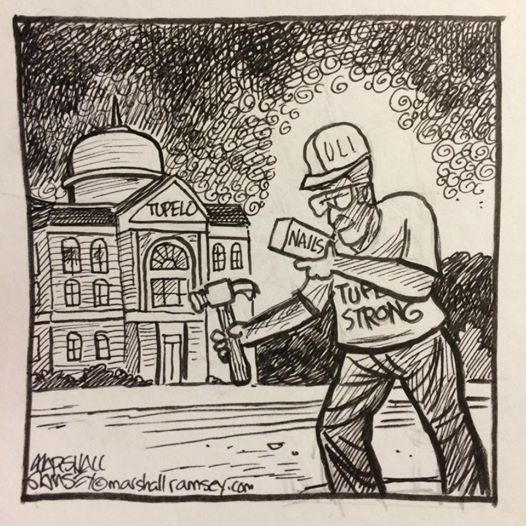
Good morning! I’m off to Tupelo (on the road again!). Hope you have an amazing day.

10312139_10154118652550721_2830591580031690613_n

Posted in Cartoon, MRBA | 16 Comments

SHORT STORY: The Day the Angel of Death played Matchmaker

250882_10151817886735721_1373930428_n

The Angel of Death doesn’t actually do her own killing. She hires hit men, mercenaries if you will, to do her dirty work. These are people who’ll trade a little bit of their souls for more time on this Earth.  Today’s killer was chosen to take out Fredrick Simms II, an investment banker and all around jerk.  Aged 45, Fredrick was on his second divorce and had screwed over more people than WorldCom and Enron combined. The Angel of Death admired his ruthlessness. But he had to go.  It was just his time.

Three-time con Barry McReady was assigned the job of eliminating Fredrick. The Angel of Death laid out the plan: Barry would meet Fredrick (who was on a business trip to New Orleans) on the corner of Conti and Bourbon Streets in the French Quarter. Barry would approach Fredrick and ask for money. Then when Fredrick refused, Barry would shoot him in the stomach with a .22 snub-nosed revolver. Fredrick would bleed-out in front of total strangers and Barry would run away.

At least that is how it was supposed to happen.

But Barry had been in a loser his whole life. And on the night of his biggest job ever, he messed that up, too. The gun went off, sending Fredrick to the ground. But the gun-shot wound was too far to the right, making it, at best, superficial. Sure, Fredrick bled. But not enough to kill him. Barry looked down at the man he thought he killed and ran.

But Barry didn’t see the police car responding to the gunshot.  The Ford Crown Victoria hit the running shooter and Barry’s head his the pavement. He was killed instantly.

Fredrick’s consciousness faded as he cheated death and slipped into a coma.

The Angel of Death doesn’t tolerate failure. And because of it, Barry paid with his life and soul. She looked down at Fredrick’s body on the ground. To make up for the screw up, Fredrick was rewarded with a second chance.  The Angel of Death wiped Barry’s memory and slate clean.

Fredrick’s memory would come back in bits and pieces — but only the good parts. The dark side of Fredrick Simms died that night in the French Quarter.  By the time he left Charity Hospital, Fredrick as a new man who had to fit back into his old world.

It wouldn’t go well.

“What’s wrong with him?” one of his partners asked.

“I don’t know. He seems, so, well you know, nice.”

“That gun shot wound took his edge. We can’t have that kind of cancer around here.”

The firm of Ruthless, Ruthless and Simms soon lost one of its founding partners.  Within four months, Fredrick given a huge severance package and sent into a new life.

That night, surrounded by cardboard packing boxes, Fredrick looked where he could move. He wanted to start a new life in a new place. A place where he could start a new old life. Fredrick got on his laptop and booked a one-way flight to Mobile, Alabama.

He was going home.

Fredrick had graduated form the Mitchell College of Business at the University of Business in 1991. Talented enough to go Harvard, he did just that for grad school. He went on to earn his MBA and moved back home to make his fortune. He worked ungodly hours in a skyscraper overlooking the Mobile River shipyards.  While on a weekend trip to Orange Beach, he met a young girl working in one of the souvenir shops.  Her name was Stacy Duval and she whitest smile and tannest skin.  After two weeks, they had gotten married and lived in Fredrick’s small bungalow near Fairhope.  If passion gave off electricity, they could have lit downtown Mobile for 50 years.

But Fredrick’s dark side soon revealed itself.  His ego was too big for one woman, even if she was perfect.  Stacy left Fredrick and divorced him soon afterward. Fredrick left for New York. The rest is, as they say, misery.

Now a decade later, Fredrick would win her back.  But proving you’re not a monster is easier said than done.  He went back home in search of the first love of his life.

Stacy had remarried a year after her divorce from Fredrick to an Sergeant Stan Hughes, U.S. Army. They had a daughter named Julia after his first tour of duty in Afghanistan. But soon he was gone again. And again. And again. Three months into his third tour, the Angel of Death used the Taliban to take Stan from this world.  Stacy was now a widow, divorcee and a single mom. She vowed on Stan’s casket that she would raise their daughter well.

She watched on that muggy July morning as his casket dropped down into the ground. And her heart went into the ground with it. “I’ll never love anyone again — well, other than Julia.”  Stacy’s heart grew cold.

The Angel of Death watched all of this and for one of the first times ever, felt guilty.  She would intervened once again.

Tourist traffic choked the idyllic streets of Fairhope.  Summer was the busy season for Gulf Coast Tours and Clarence the driver cursed he tried to navigate his tour bus through the glut of cars. He felt pressure in his chest. He felt weird, almost odd.  Sweat beaded his forehead and pain shot up his left arm.  It was his time to go.

And the Angel of Death was handling this one personally.

The driverless bus creamed through the intersection, aiming right for Stacy and Julia in the crosswalk.

But before it could hit them, a man ran from the curb and pushed them out of the way onto the ground.

The bus creamed into a building, and tipped perilously.  The man who pushed Stacy and Julia out of the way then got up and ran over to the bus to help rescue the passengers. He grabbed an extinguisher and put out a small fire.  Other than Clarence the bus driver, there were no other  fatalities. The Mobile Press-Register would profile the hero in Sunday’s paper. His name was Fredrick Simms. And he was just in the right place at the right time.

Stacy looked at her rescue with complete disbelief.

“Fredrick, is that you?”

She brushed sand and gravel out of her bloody knee. Tears welled in her eyes. She then started talking to herself.

“It can’t be Fredrick. He would have run the other way.”

Fredrick tenderly felt the burns on his hands. He looked at his ex-wife and the little girl with her. Tears started to swell in his eyes, too.

“Stacy? Stacy is that you?”

“You saved us.”

“You saved me.” Fredrick looked at her. “I have missed you.”

Stacy felt the pain from so many years ago stab at her heart. She started to back away.

“NO! No! I am a changed man. Promise!” Fredrick stopped and raised his shirt. A grotesque scar showed where the bullet had killed evil Fredrick.

Stacy looked at the red scar and said, “You need to get your hands looked at.”

Fredrick looked at them. They were bright red and burned. But he couldn’t feel any pain. His heart beat wildly.

“Nah. I’m alright. Can I buy your beautiful daughter an ice cream cone? It’s been a tough afternoon. Maybe even one for you?”

Julia looked at this man she once knew. Something was different about him.  Something special. He now had a glow of goodness about him.

All three of them walked through the police and crowd to get ice cream. And into a new life together.

The Angel of Death smiled. It was the first time she had ever played matchmaker. It would also be the last. Yes, she would successfully come for Fredrick Simms again — just not for another 50 years.


Posted in Writing | 1 Comment