It had been a slow morning at Panther Burn International Airport. A Cessna 172 and a mosquito landed earlier in the day. But right now, all the airport’s activity consisted of a sleeping beagle and the previously mentioned mosquito. The young man’s job was putting gas in the airplanes, food in the beagle and apparently blood in the mosquito. Since there were no planes taking off and the beagle and the mosquito were fed, he sat in the trailer watching a rerun of Sports Center on ESPN and flipping through an Aviation Week magazine. This was what was considered as excitement at Panther Burn International Airport.
The airport’s name was a long-running joke in Panther Burn. The local physician, Dr. Ken McClain had flown his Beechcraft Bonanza to Massachusetts a few years ago and since Massachusetts people talked so funny town folks figured it had to be a foreign country. So Panther Burn International Airport got its name. The title of “International” wasn’t official, but it was funny.
The beagle rolled over on the ready room couch and started to snore.
The airport was born during World War II. The Army Air Corps wanted to find a secret place in the nation to do secret training for secret pilots to fly secret missions in secret planes. Panther Burn was secretly picked because it was the one place in the good ol’ USA that the Germans or Japanese would never find, never-the-less attack. So SeaBees cut down the trees, filled in the swamp at the end of Old Man Fredrick’s cotton field and paved a runway. In secret.
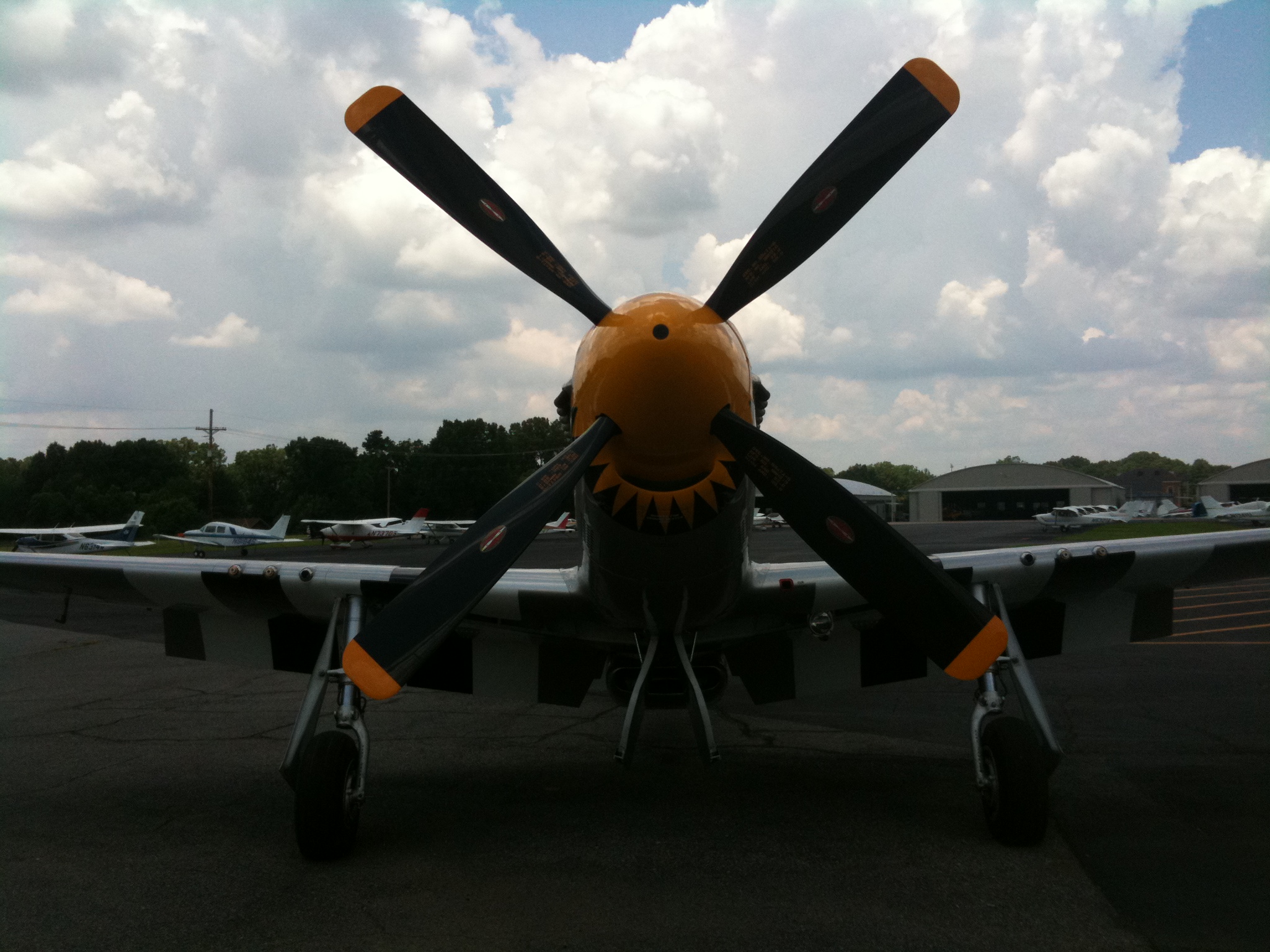
After the war, weeds and trees did what the Germans and Japanese never did: They attacked the abandoned airbase. The young man’s grandfather, a fighter pilot in Europe, came to town, bought a surplus P-51 Mustang from a banana republic, a bush hog and started running the newly christened Panther Burn Airport. Crop dusters followed and the rest is a very small footnote in history.
And in his spare time, he also started a family. His first and only son was born in 1946.
The young man looked at a picture of his grandfather holding his infant dad and smiled. Aviation fuel ran in the young man’s veins. He had learned to fly as a small child and could rebuild an airplane engine at 16. He was the youngest person in state to have soloed. Flight was a family tradition and he was determined to carry it on.
Another mosquito landed and taxied down the single runway. It was headed into town for Danny Jones’ third birthday party that was being held outside. This afternoon would be busy.
The young man looked across the tarmac to an old, closed hanger. That was his grandfather’s personal hanger. When he passed away, his dad had put a padlock on the door. Inside were too many memories for him to handle all at once. And there was his grandfather’s Mustang. This is where he and his father violently (to the point of nearly getting into an alcohol-fueled fistfight) disagreed. Mustangs shouldn’t be locked away. They should be free.
One night, the young man found the hangar’s padlock’s key. He secretly made a copy and never brought the topic up again to his father. And when the old man was asleep or out of town, the young man went into the Mustang’s stable (the hangar) and quietly began to restore it to its former glory.
A few months later, a UPS truck pulled up with a package. The young man intercepted it before his father even looked up from his paper. He quietly tucked it away for later in the evening. More Mustang parts. More expensive Mustang parts. (The beagle woke up just long enough to bark at the leaving truck. He was a guard dog. In eight years, the couch had never been attacked.)
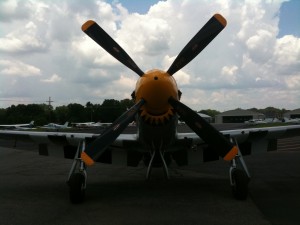 That night, the young man slipped into the hangar and worked on the mighty Mustang’s Merlin engine. During a break, he walked over to look at the photos of his grandfather and his old man on the hangar wall. Both had been fighter pilots. One in World War II and the other in Vietnam. The young man smiled as he saw the younger versions of the old men and their sky chariots. As he turned to go back to work, he noticed two boxes in a dimly lit corner of the hangar. He walked over and inspected them. One was his grandfather’s and the other was his father’s.
He opened up his grandfather’s first. Inside was a diary and a box. He opened the box and found medals. A Purple Heart. A campaign ribbon for World War II. A Distinguished Flying Cross. And a baby blue medal that caused the young man’s jaw to drop. There, crumpled in an musty box was a Congressional Medal of Honor. His grandfather, the most modest, had never mentioned he was a hero. Hitler’s own headache. Guess what goes on in Europe stays in Europe.
He flipped through the old leather diary and read about his grandfather’s missions. About the secret missions. The kills. His grandfather was an ace. A knight of the sky. He had trained at Panther Burn. It was all right here in his own handwriting. He had met his grandmother at the local diner. When the war was over, he wanted to come back to the happiest moment of his life — the first time he saw her beautiful blue eyes.
The young man then opened up his father’s box. There were also medals. A Navy Distinguished Flying Cross. There were also pictures of an aircraft carrier. There were pictures of his F-4 Phantom. And his diary as well. After three tours of duty, his father had been shot down over North Vietnam and spent seven years in the infamous Hanoi Hilton. He never spoke about those years. He just allowed them to burn inside. He came home in 1974, married his mom and she had their only son ten years later. His father and grandfather did not see eye to eye on war, Army vs. Navy, politics or much else. Other than him. They both loved the young man. He was the glue that held the two men together.
The young man sat there, tears in his eyes, reading about the torture his dad went through. He found two personal notes from Senator John McCain and Admiral James Stockdale. His heart swelled with pride knowing that he came from such heroic stock. He read and read until he heard the birds announce the impending dawn. He put the boxes back in the corner, locked the hanger and quietly slipped back to his apartment.
The young man’s dad came to work that day and noticed the family hanger was open. He cursed, loudly enough to be heard over a Cessna’s revving engine, and started to limp quickly over to the building. Just when he got halfway there, he heard the mighty Mustang come to life. He stopped with his jaw dropped.
The Mustang, repaired, fueled and polished, galloped out of the hanger. Piloting it was the young man. He taxied up to the stunned old man and motioned to his dad. His dad scrambled up the wing and watched as his son squeeze into the small jump seat that had been installed where the old fighter’s ancient radio had been. The old man climbed into his father’s former seat, put on his father’s old helmet and put his fingers around the stick of his father’s old fighter. He looked at the old picture of his mother still taped to the corner of the cockpit. He looked in the mirror to see his son’s grinning face. He felt then his own father’s spirit flow through him.
A miracle happened that humid summer morning at Panther Burn International Airport. A young man helped a broken man find peace. They spoke the common language that all three generations of men in their family spoke: Flight.
A Mustang and a tortured man’s soul were once again free.
As the old beagle barked, the fighter gained speed and leapt off the runway with a roar. Inside were two smiling men.
It was just another day at the Panther Burn International Airport.